
Public Transport in Stockholm - SL Tickets, Metro, Bus & Ferry
Public transport in Stockholm - SL runs the Tunnelbana (metro), buses, commuter trains and ferries, which tickets are worth it and how to get around.
Contents
Stockholm is spread across 14 islands, and that's exactly what makes getting around here more interesting than in most cities. The compact centre is best covered on foot, and for everything else there's a single public transport network under the SL (Storstockholms Lokaltrafik) brand - including ferries that turn your commute into a small boat trip.
The SL network at a glance
SL brings together all public transport in the region under one fare, a single ticket is valid across:
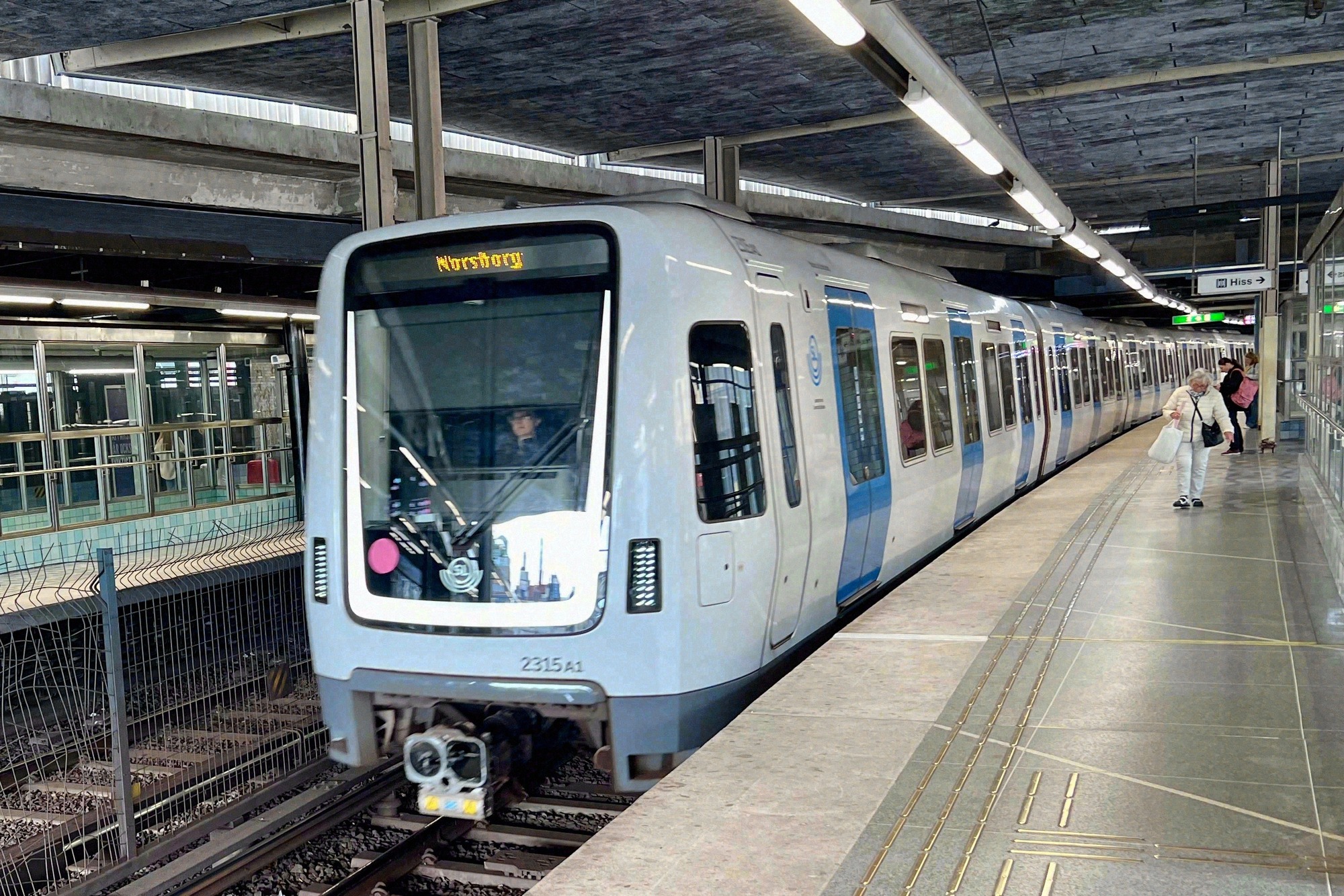
- Tunnelbana (metro), the fast backbone for longer trips across the city.
- Buses, fill the gaps the metro doesn't reach, including parts of Djurgården.
- Pendeltåg (commuter trains), link the centre with the suburbs and surrounding region.
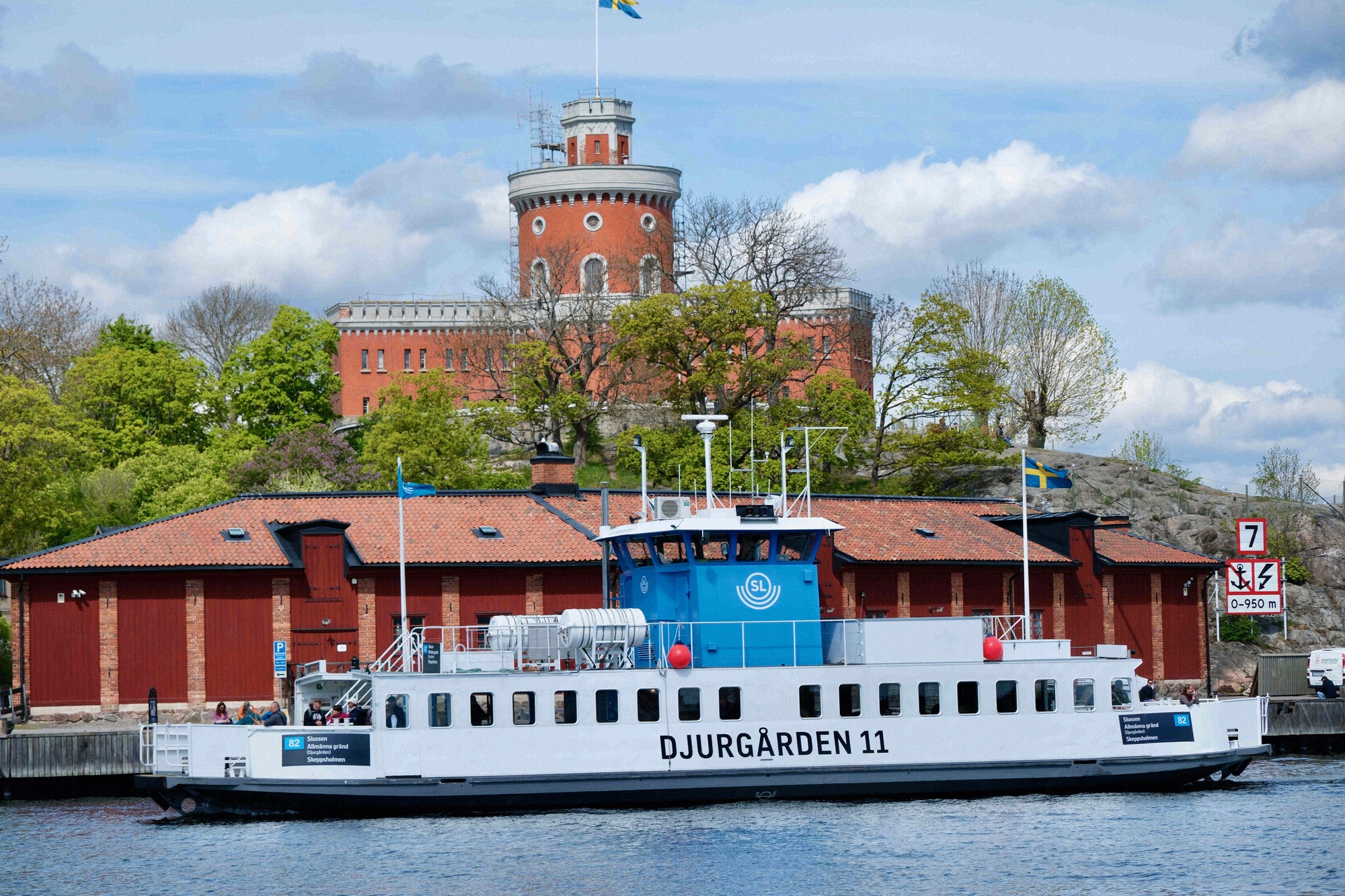
- Ferries (commuter boat lines 80, 82, 84 and 89), the waterborne network across the harbour and out to the islands.
The practical upshot is that you buy once and can switch freely between all four modes. If you're combining several attractions in one day, it's also worth checking the Go City Stockholm Pass, which we cover in our guide to the Stockholm Pass & SL tickets.
SL tickets and fares
SL has just two ticket families: the single journey ticket and the travelcard, which gives unlimited travel within its validity period. These are the fares from SL's current price list, checked on sl.se, as of September 2026:
| Ticket | Adult | Reduced | Validity |
|---|---|---|---|
| Single journey | 43 SEK | 26 SEK | 75 minutes, transfers included |
| 24 hours | 180 SEK | 110 SEK | from first use |
| 72 hours | 360 SEK | 220 SEK | from first use |
| 7 days | 470 SEK | 290 SEK | from 00:00 on the first day of travel until 04:30 the day after it expires |
| 30 days | 1,060 SEK | 650 SEK | as the 7-day card |
You pay the adult fare between the ages of 20 and 64. The reduced fare applies to everyone under 20, everyone aged 65 and over, and students holding a Swedish student identity card with the SL logo, a student card from your home country will not do. Children under 7 travel free when accompanied by someone holding a ticket, and a more generous arrangement for children applies at weekends and on public holidays. Travelcards are transferable, but only one person can use one at a time.
As a rule of thumb for a visit: from around four journeys a day the 24-hour card pays off, and for two or three active days in a row the 72-hour card. If you mostly walk and only ride morning and evening, single tickets are cheaper.
Where to buy, how to pay and how long it lasts
Cash is not accepted on buses or trains. Three routes lead to a ticket:
- Contactless bank or credit card (Visa, Mastercard or American Express), simply tapped on the gate or the reader on board. That automatically charges a single journey at the adult fare. To get the reduced fare you have to register the card on sl.se beforehand, by the day before you travel, otherwise you pay full price.
- The SL app, the official "SL - Reseplanerare och biljetter" app combines journey planning with digital ticket purchase for every ticket type, travelcards included.
- SL service points and staffed ticket booths, present at most stations and the place for anything you'd rather not handle through the app. Any type of card can be loaded onto an SL card (the green plastic one); the card itself costs a one-off 50 SEK and can be reused on your next visit.
A single journey ticket is valid for 75 minutes and any number of transfers, with the last change made before it runs out. The app and the reader at the gate both show the time remaining.
T-Centralen and Cityterminalen, the two hubs
Almost every journey in Stockholm passes the same point sooner or later: Stockholm Central Station (Centralplan 15) and its two neighbours.
T-Centralen is the metro station beneath it and the only station where all three Tunnelbana lines meet, the green, the red and the blue. If you change trains, you almost certainly change here. The routes between commuter trains, metro and mainline trains are signposted and stay indoors. The SL service point is in the main hall towards Vasagatan; the station halls are open Monday to Friday from 03:00 to 01:00, Saturday from 04:00 to 01:30 and Sunday from 04:00 to 02:00. T-Centralen is also one of the highlights of the art metro: the blue-and-white painted cavern on the Blue Line platform is among the most photographed spots in the city, more on that in our guide to Tunnelbana art.
Cityterminalen is the coach station, at Klarabergsviadukten 72, right by Central Station and a few minutes away on foot. It is Sweden's largest coach terminal with around 800 buses a day, open daily from 03:00 to 00:15, with waiting halls, toilets, lockers, shops and cafés. Departures include:
- the airport coaches to Arlanda, Skavsta and Västerås,
- the connecting buses to the ferry terminals of Silja Line/Tallink, Viking Line, Eckerölinjen and Destination Gotland,
- long-distance coaches within Sweden as well as international routes, among them Copenhagen, Berlin and Oslo.
For arrivals that means: if you come in by coach from an airport or another city, you step off at Cityterminalen and are at the metro within a few minutes, with no further connection needed.
Tunnelbana, the art metro
The Tunnelbana has seven lines (10-19) in three colour-coded groups, the Blue Line (10/11), the Red Line (13/14) and the Green Line (17/18/19), spread over 100 stations and a good 100 kilometres of track. It's rightly known as "the world's longest art exhibition": according to SL there is artwork at almost all 100 stations, from bare rock to painted cave ceilings. For which stations are worth a small art detour, see our guide to Tunnelbana art.
You barely need to think about frequency, during the day a train comes roughly every 10 minutes, every 5-6 minutes at peak times (every 2-3 minutes on central sections), and every 15 minutes early and late. Services generally run from around 05:00 to 01:00.
Handy for a night out, at weekends the Tunnelbana runs around the clock, roughly every 30 minutes. On the other nights (Sunday to Thursday) there's an overnight break, covered instead by night buses. Entrances are marked with a large T on a white background, sometimes only with the station name in the inner city.
Ferries, public transport on the water
Stockholm's ferries are about the best thing that can happen to a commuter network, they cost nothing extra and throw in a view from the water. All travelcards are valid on commuter boat lines 80, 82, 84 and 89. Two of them matter most to visitors:
- Line 82 (Djurgårdsfärjan), links Slussen via Skeppsholmen with Djurgården (Allmänna gränd), year-round, journey time around 10 minutes. The classic short hop over to the museum island.
- Line 80 (Pendelbåt), runs between Nybroplan/Ropsten and Nacka, calling at Frihamnen, Lidingö, Nacka Strand, Kvarnholmen, Saltsjöqvarn and Allmänna gränd among others; the full crossing takes about 25 minutes. It's really a commuter route, but it's hard to beat as a cheap sightseeing trip from the water.
The archipelago itself is served by other operators, more on that in our Stockholm Archipelago guide. The public operator Waxholmsbolaget (part of the SL system, departing from Strömkajen, among other points) runs year-round. Alongside it, the private operator Strömma (Cinderella boats, from Nybrokajen) runs seasonal tours, for example to Vaxholm (around 55 minutes by boat) or a guided archipelago cruise (around 1.5 hours). Strömma's boats run on their own fares (from around 190 SEK in season) and can only be booked in advance; the fullest schedule runs mainly over summer.
Getting to the big sights
Most of the highlights sit surprisingly close together, and are almost always reachable more than one way. For the classics on and around Djurgården:
- Vasa Museum, tram 7 or bus 67 to "Nordiska museet/Vasamuseet"; alternatively the Red Line to Karlaplan and about a 10-minute walk, or ferry 82/80 to Allmänna gränd and about an 8-minute walk.
- Skansen, tram 7 from T-Centralen or bus 67 from Odenplan; by ferry, line 82 to Allmänna gränd (around 400 m on foot) or bus 69/76 to Djurgårdsbron (around 950 m).
- Drottningholm Palace - Tunnelbana (Green Line) to Brommaplan, then bus 176 or 177 to the Drottningholm stop (around 200 m to the entrance); in summer you can alternatively take a sightseeing boat from Stadshuskajen/Klara Mälarstrand.
For Gamla Stan take the green or red line to Gamla stan station, one stop south of T-Centralen. Bus routes 67 (Odenplan-Skansen/Djurgården) and 69 and 76 (Djurgårdsbron) are especially useful for visitors, they connect the museum island, which the metro doesn't reach.
Telling SL, Arlanda Express and airport coaches apart
Three completely separate fare systems meet at Arlanda Airport, and this is where visitors most often get their sums wrong:
- SL (Pendeltåg) runs between Stockholm and Uppsala via Arlanda. Your SL ticket covers the journey, but a passage fee applies at the airport for the route between platform and terminal, which SL charges separately; under-18s are exempt.
- Arlanda Express is a private high-speed train, not operated by SL. SL tickets are not valid on it, it has its own, considerably higher fare, and it is the fastest way into the city.
- Airport coaches leave from Cityterminalen and also run on their own fares. They serve Skavsta and Västerås too, which the commuter train doesn't reach at all.
Which option suits your budget, arrival time and airport, with all current fares and journey times, is covered in the guide From the Airport to the City Centre.