
Overview
Churches in Stockholm
Coronation cathedral, royal tombs, Baroque on Södermalm and Palme's grave: which church to choose and when each one is open
Gustav III was crowned in Storkyrkan, and almost every Swedish king since Gustav II Adolf lies in Riddarholmen Church. Four of the six churches stand in the old town or on the neighbouring island, one each on Södermalm and in Norrmalm, and three charge no admission.
Churches
German Church (Tyska kyrkan)
St Gertrude's German Church with the tallest tower in the old town
Churches
Finnish Church (Finska kyrkan)
The Finnish congregation's church in a former royal ball-game hall on Slottsbacken
No results found.
Contents
Stockholm's most interesting churches are close together. Storkyrkan (Stockholm Cathedral), the German Church (Tyska kyrkan) and the Finnish Church (Finska kyrkan) stand in Gamla Stan, and Riddarholmen Church is on Riddarholmen, about five minutes' walk from the palace. Katarina kyrka is on Södermalm, and Adolf Fredriks kyrka is in Norrmalm on Sveavägen. Which you visit depends on whether you are drawn to royal history, Baroque buildings, the graves of famous Swedes or organ music, and on which day of the week you are in town.
Coronations and royal tombs
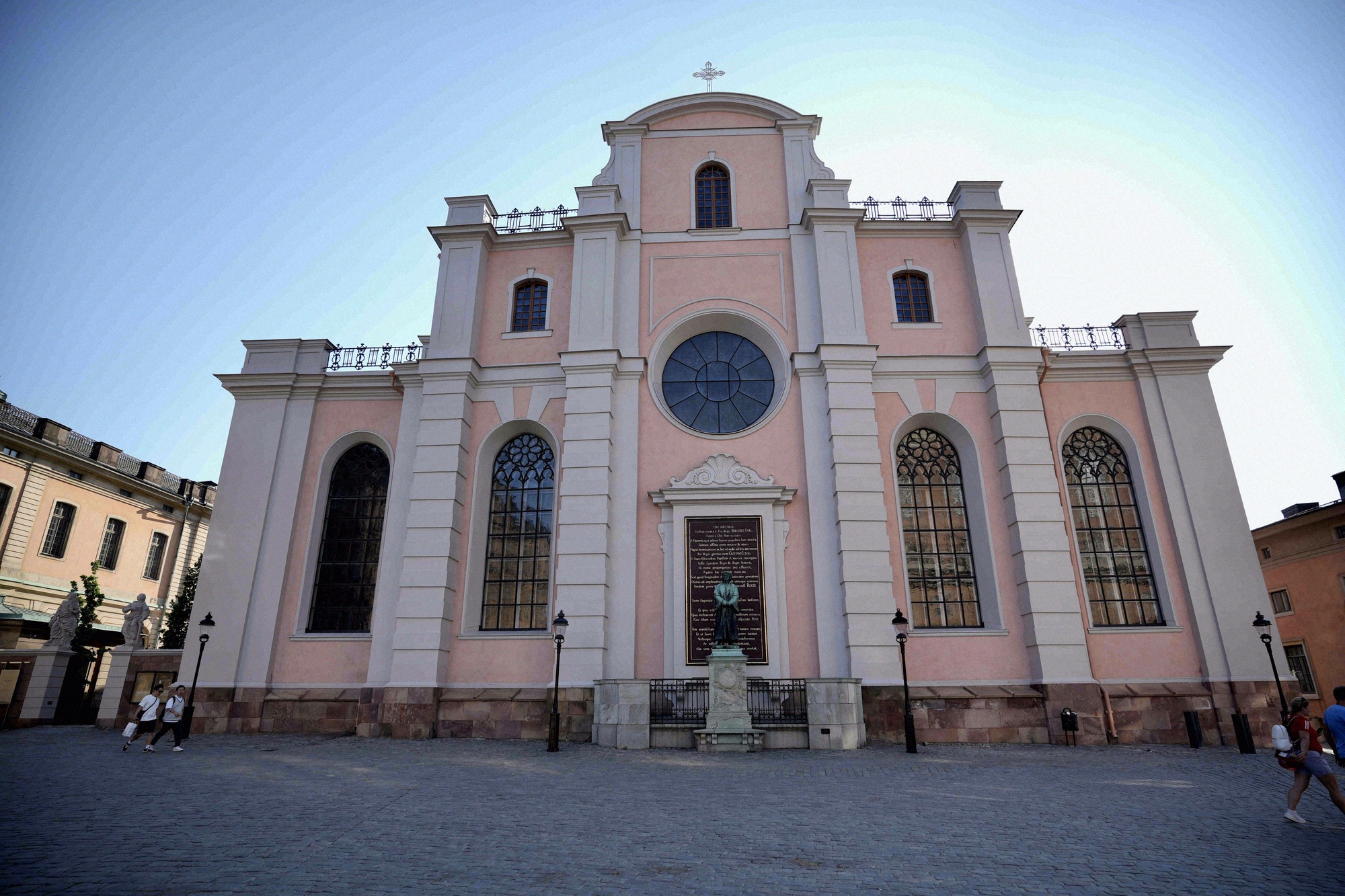
Storkyrkan is the oldest church in the city, documented since 1279 and a cathedral since 1942. It stands between the palace and Stortorget at the highest point of the old town. Gustav III was crowned here in 1772, and in 1873 Oscar II became the last Swedish monarch to be crowned here; in 2010 Crown Princess Victoria and Daniel Westling married in this church. The interior of bare brick holds the 3.5-metre wooden sculpture St George and the Dragon from 1489. A copy of the Vädersolstavlan (Sun Dog Painting) also hangs here; it shows a halo over Stockholm in April 1535 and is regarded as the oldest known colour view of the city.
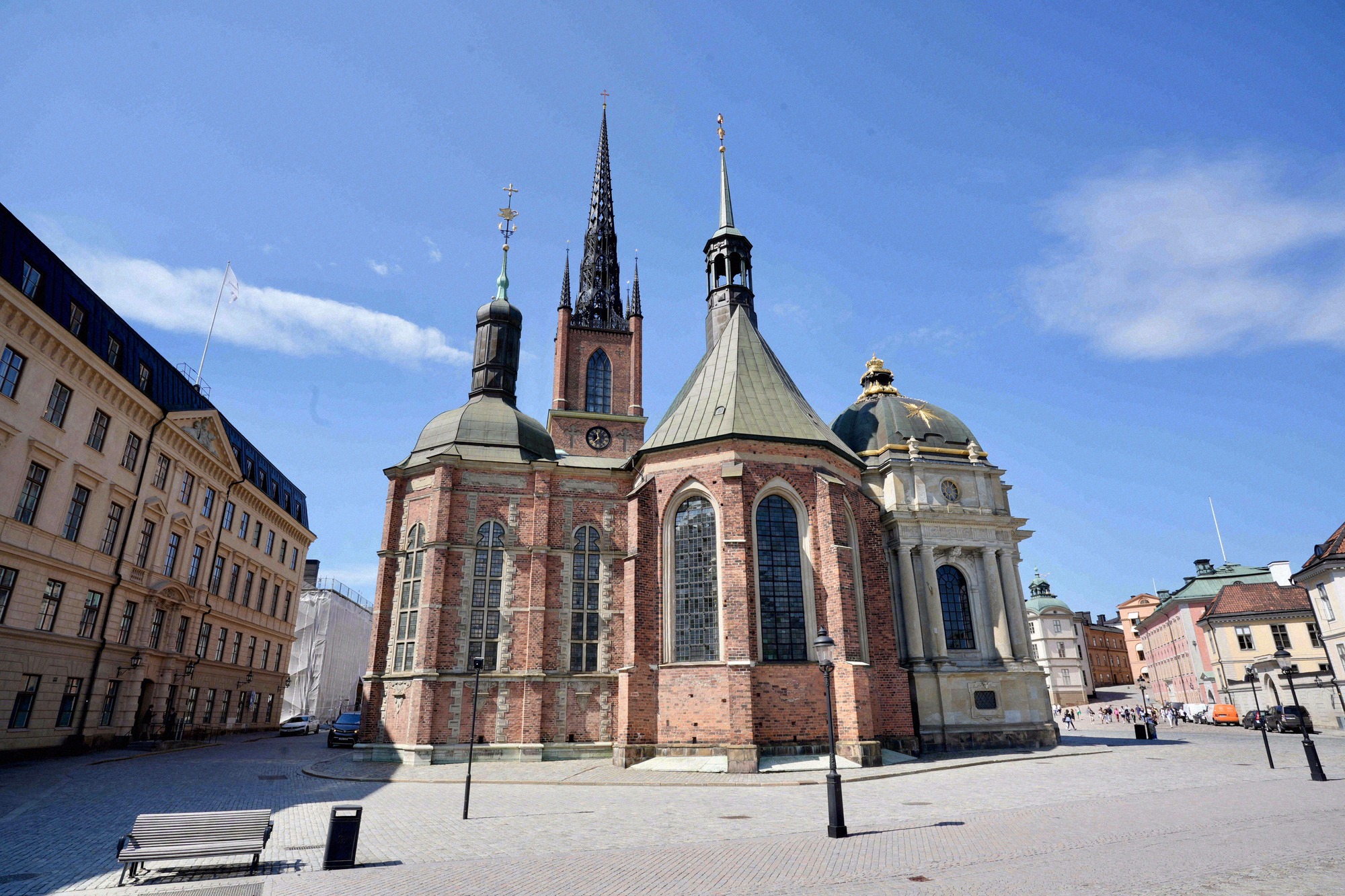
Since 1807 Riddarholmen Church has served only as a burial church. Apart from Queen Christina, every Swedish ruler since Gustav II Adolf, who fell at Lützen in 1632, is buried here; the last was Gustaf V in 1950. In front of the high altar stand the tomb chests of Magnus Ladulås and Karl Knutsson Bonde. In the burial chapels lie Gustav II Adolf in Italian marble, Karl XII in black marble and Karl XIV Johan in granite from Älvdalen, and the floor is made of gravestones. The church opens only from 1 May to 30 September. Its cast-iron spire is being restored until 2028, but the church interior stays open during the season.
The German and Finnish congregations
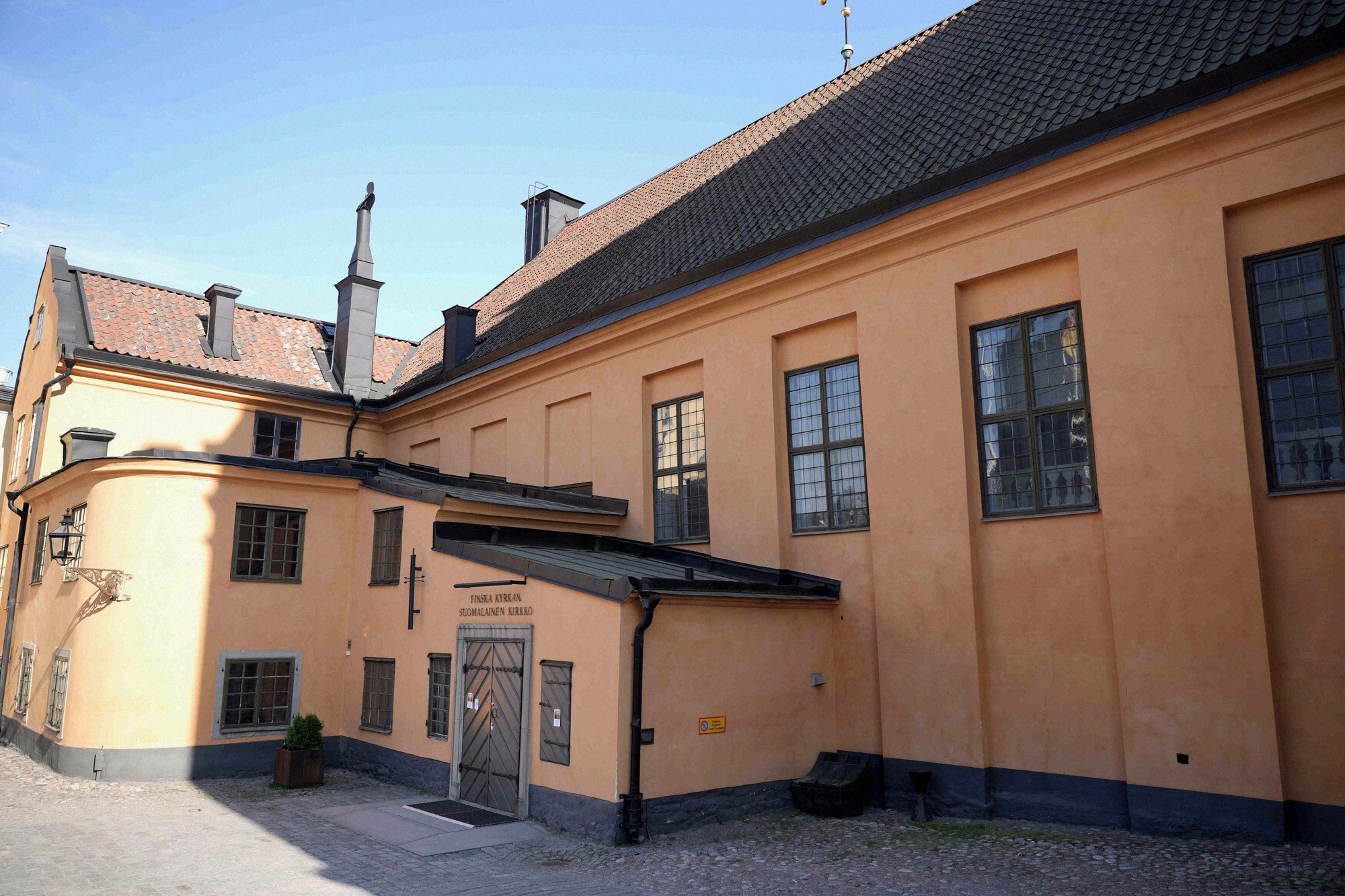
The German Church grew out of the guildhall of German merchants and was completed in early 1643 as the church of St Gertrude's congregation. After a fire in 1878 it was given a new tower which, at 96 metres, is the highest point in Gamla Stan. Its carillon plays four times a day, including the hymn “Nun danket alle Gott” (Now Thank We All Our God). Inside, look for the altarpiece by Markus Hebel, almost ten metres high, and the royal gallery designed by Nicodemus Tessin the Elder in 1672. You can see the interior only from Friday to Sunday, until 15:00 each day, and daily between Christmas and Epiphany.
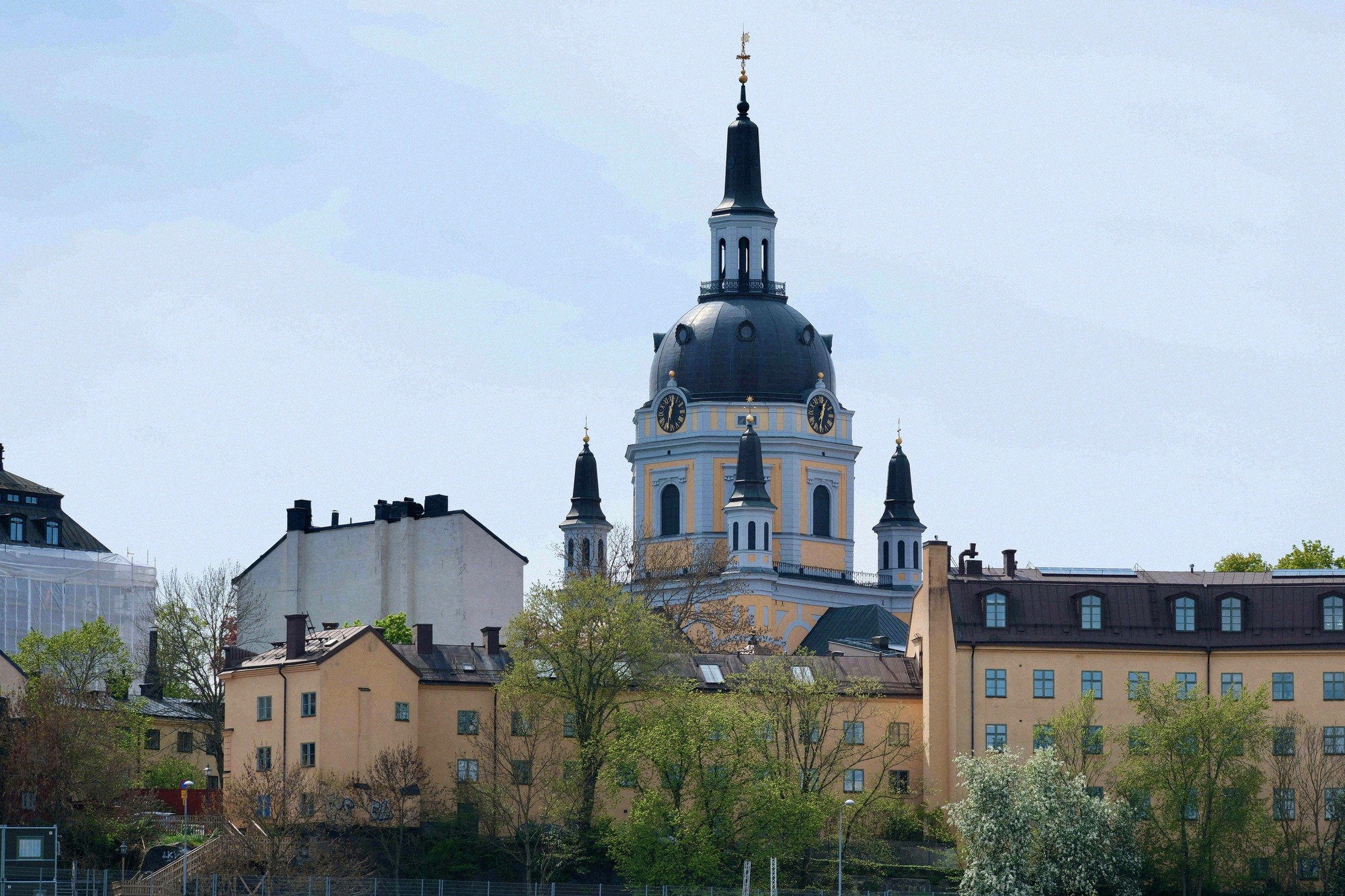
About 170 metres away on Slottsbacken stands the Finnish Church. The building went up between 1648 and 1653 as a ball-game court and has served the Finnish congregation as a church since 1725. There are no set visiting hours for the interior: you get in for the Sunday service, for the open hymn singing on the last Thursday of the month or for concerts, which are usually free. The small park in the courtyard south of the church is open at all times. Here sits the Järnpojke (Iron Boy) by Liss Eriksson, 15 centimetres tall and the smallest public monument in Sweden. Passers-by stroke his head and leave coins.
Baroque and calm on Södermalm
Katarina kyrka was built between 1656 and 1695 to plans by Jean de la Vallée, the first centrally planned church in the Nordic countries, laid out as a Greek cross. Even in the 17th century its tower was intended as a landmark for ships approaching Stockholm; today it is 72 metres high. In May 1990 the church burnt out and the tower collapsed. For the rebuilding, craftsmen worked with 17th-century techniques, using 52,000 hand-forged nails and 150-year-old spruce from Hälsingland, and the church was reconsecrated in 1995. Among those buried in the churchyard are Anna Lindh and Tomas Tranströmer. It is only a few minutes' walk from Medborgarplatsen metro station and from Mosebacke torg.
Palme's grave in Norrmalm
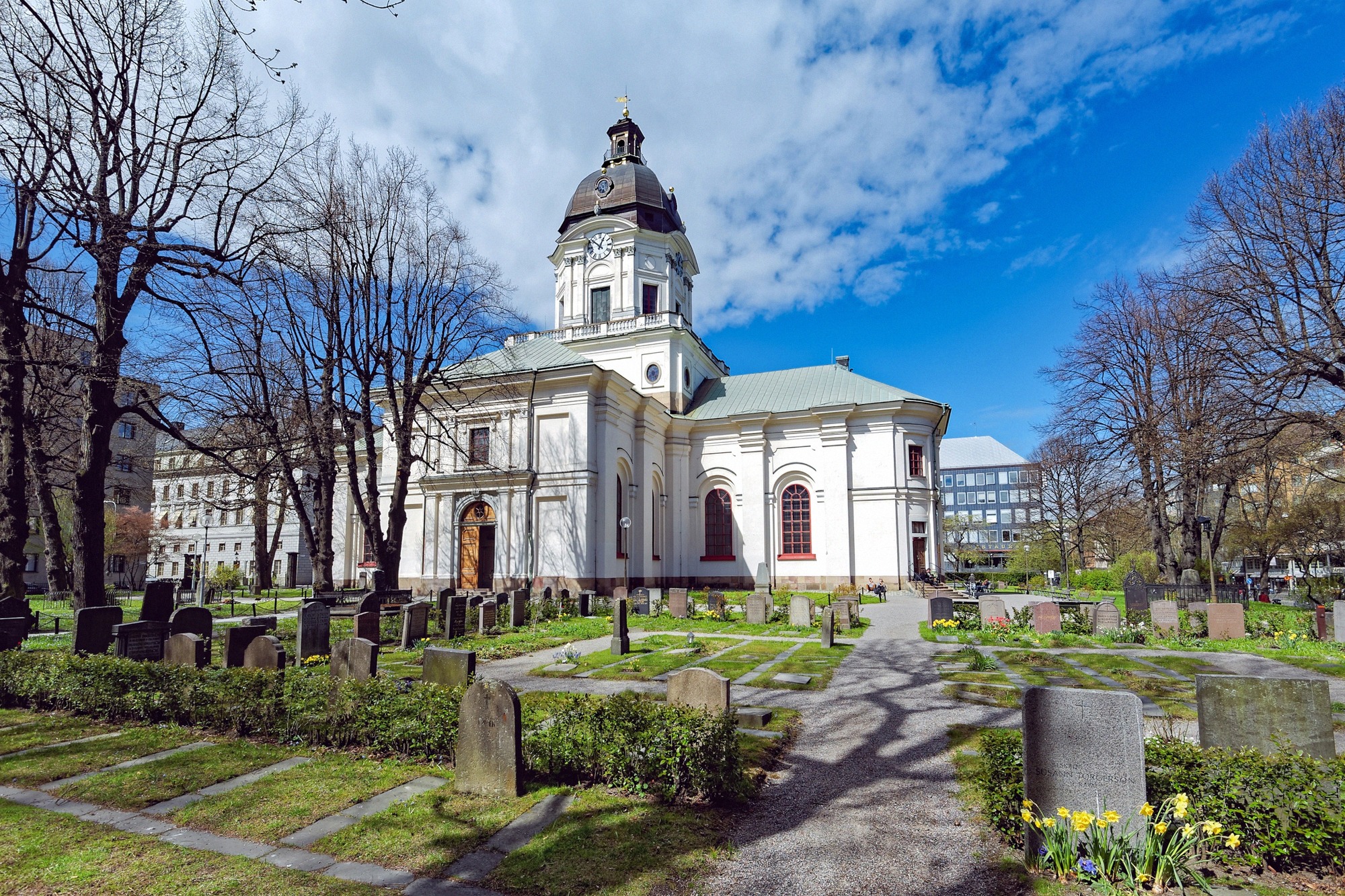
Adolf Fredriks kyrka was built between 1768 and 1774 to plans by Carl Fredrik Adelcrantz; around 1900 Julius Kronberg painted the dome with scenes from the life of Jesus. Olof Palme, who was shot in February 1986 at the corner of Sveavägen and Tunnelgatan, lies in the churchyard, and Hjalmar Branting and the sculptor Johan Tobias Sergel are buried here too. Sergel created the altar relief and the memorial to René Descartes, who lay in this churchyard from 1650 to 1666. The nearest metro station is Hötorget on the green line.
Organ music at lunchtime
At lunchtime three of the churches offer music with no admission charge. At Katarina kyrka the great organ with 62 stops plays for about 25 minutes on Tuesdays and Thursdays at 12:00. In autumn Adolf Fredriks kyrka holds lunchtime organ recitals on Wednesdays at 12:15. During Advent the German Church holds a lunchtime concert and the Quempas carol singing, both also free.
Which church is open on which day
Storkyrkan, Katarina kyrka and Adolf Fredriks kyrka are open daily. Adolf Fredriks kyrka closes for a short break on almost every day, and at Katarina kyrka a funeral often takes place between 14:00 and 15:00. Riddarholmen Church opens only from May to September, the German Church only from Friday to Sunday, and the Finnish Church only for services and concerts. So if you come on a weekday in winter, plan on Storkyrkan, Katarina kyrka and Adolf Fredriks kyrka. Storkyrkan and Riddarholmen Church charge admission, and the German Church asks for a small contribution. The map of Stockholm shows where the churches lie in relation to each other, and more sights in the old town are collected under Gamla Stan.
Frequently asked questions
Which church should I choose if I only have time for one? +
Storkyrkan (Stockholm Cathedral). It is open daily all year, stands next to the palace and shows the wooden sculpture St George and the Dragon from 1489 and the oldest known colour view of the city. From May to September Riddarholmen Church is the alternative if the royal tombs appeal to you more than the coronation cathedral.
Which churches are free to enter? +
Katarina kyrka, Adolf Fredriks kyrka and the Finnish Church. The German Church asks for a small contribution. At Storkyrkan children and young people up to 18 pay nothing, and Riddarholmen Church is available on a combined ticket with the Royal Palace.
Which church covers royal history in winter? +
Storkyrkan. It is open daily and tells of the monarchs through coronations and the royal pews. Riddarholmen Church, with the royal tombs, opens only from 1 May to 30 September; for the rest of the year you can only see it from outside. Public guided tours there run only at weekends in September, at 15:30.
Can I bring a pushchair or a backpack inside? +
Not into Storkyrkan, Riddarholmen Church or the Finnish Church: pushchairs and large bags stay outside, and at Riddarholmen Church umbrellas too. Adolf Fredriks kyrka has step-free access through the main entrance, and Katarina kyrka is equipped for people with reduced mobility. Everything else families need is collected in Stockholm with kids.
Are there services in English or German? +
Storkyrkan holds a Holy Communion service in English on Sundays at 18:00, except on the first Sunday of the month. The German congregation of the German Church holds a service every Sunday at 11:00, and on Sundays sightseeing visits only begin after it.