
Östermalm
Boulevards, Strandvägen and the market hall on Östermalmstorg
Stockholm's boulevard district east of Birger Jarlsgatan: Strandvägen on the water, stone apartment buildings from around 1900, Östermalmstorg with its market hall, Humlegården and, in the evening, Stureplan.
Contents
Just over 36,000 people live on Östermalm's 245 hectares. The district is worth a visit if you want to explore architecture on foot, eat at the Saluhall, go out in the evening or visit museums such as the Swedish History Museum and Armémuseum (Army Museum).
Ladugårdslandet becomes Östermalm
Until 1885 the district was called Ladugårdslandet; the land originally belonged to two royal farms, the Kungsladugårdar. A first town plan from 1640 mainly covered the streets around Östermalmstorg. Today's character comes from the boulevards of Albert Lindhagen's plan: east of Sturegatan the streets form a strict grid, broken only by Narvavägen and the circular Karlaplan. Most of the building took place between 1880 and 1930, and five-storey apartment blocks are typical. The most exclusive addresses are still on Strandvägen, Narvavägen, Valhallavägen and Karlavägen.
Nybroplan and Strandvägen
At Nybroplan, where Östermalm meets the water, stands Dramaten, the Royal Dramatic Theatre: founded in 1788, in its own building on Nybrokajen since 1908, and today with five stages. From here Strandvägen stretches about 1.3 kilometres east to Oxenstiernsgatan. Construction began in 1861, the quays were finished in 1876, the lime trees came in 1879 and the name in 1885. The eastern section was completed in 1896, in time for the 1897 exhibition. The stone buildings mostly date from around 1900, among them Bünsowska huset at numbers 29-33, from 1888.

From the quay in front, Strandvägskajen, boats leave for the archipelago; which islands make a good day trip is covered in Stockholm archipelago. Where Narvavägen meets the water, Djurgårdsbron leads across to Djurgården with the Vasa Museum and Skansen.
Östermalmstorg and Hedvig Eleonora kyrka
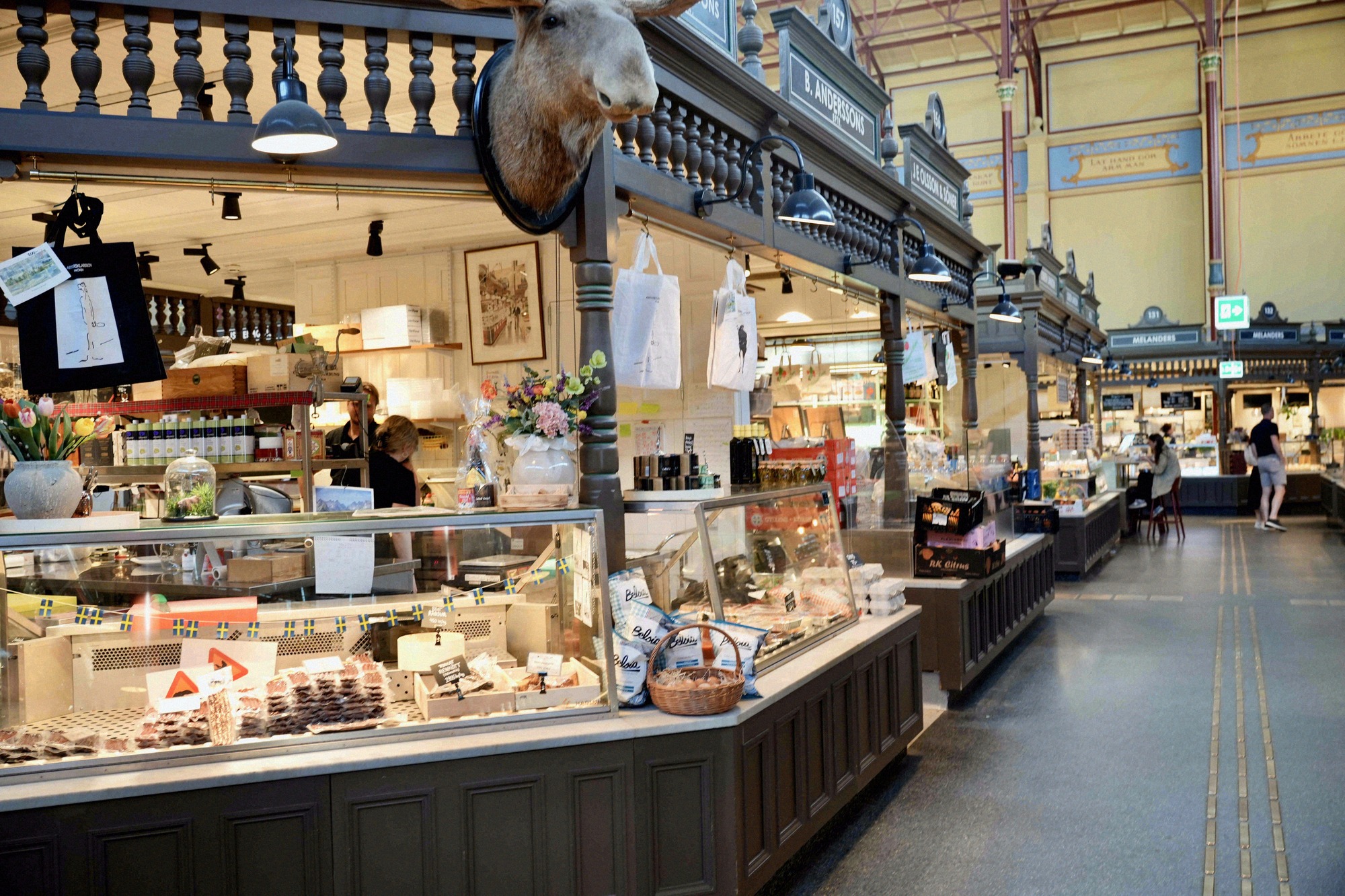
Östermalmstorg is the centre of the district. The market hall Östermalms Saluhall has stood here since 1888. Its 17 traders and eateries sell fish, meat, game, cheese and vegetables, along with cafés and restaurants that also open in the evening. On the square stands Willy Gordon's sculpture group “Mötet”.
East of it, at Storgatan 2, stands Hedvig Eleonora kyrka, an octagonal church designed by Jean de la Vallée and completed by G. J. Adelcrantz. Begun in 1669, it was not consecrated until 1737; the dome was added in 1866-1868.
Stureplan, Biblioteksgatan and Humlegården
On the western edge, right on the boundary with Norrmalm, Kungsgatan, Birger Jarlsgatan, Biblioteksgatan and Sturegatan meet at Stureplan. The classic meeting point is Svampen, “the Mushroom”, a concrete rain shelter designed by Holger Blom in 1937; since 1989 a copy has stood almost on the same spot. Next to it are Sturebadet from 1885 and the Sturegallerian shopping arcade. In the evening the bars and clubs around the square fill up. In the streets of Biblioteksstan, Biblioteksgatan and its neighbours, fashion and design brands have their shops.
North of here, between Karlavägen, Sturegatan, Humlegårdsgatan and Engelbrektsgatan, lies Humlegården. Gustav II Adolf had it laid out in 1619 as a royal garden where fruit, spices and later hops were grown; it has been open to everyone since 1869. The Royal Library has stood in the park since 1878, with Frithiof Kjellberg's Linnaeus monument in front of it since 1885. A few streets away, in the Lärkstaden neighbourhood at Östermalmsgatan 20, rises Engelbrektskyrkan, built in 1910-1914 by Lars Israel Wahlman, with a 32-metre-high vault and a 65-metre tower.
Narvavägen, Karlaplan and Gärdet
The boulevard Narvavägen links Djurgårdsbron with Karlaplan. Along it stands the Swedish History Museum with finds from Swedish prehistory and the Viking Age. Karlaplan is a star-shaped square where six streets meet, with a park and a 1,100-square-metre fountain basin from 1930; on the square is the Fältöversten shopping centre from the early 1970s.
Other sights are spread across the district: the Army Museum on Riddargatan, the royal stables, Hovstallet, in a building from 1890, and in the north the stadium of the 1912 Summer Olympics. Beyond Valhallavägen begins Gärdet, a wide meadow that is part of the National City Park. Here you will find Kaknästornet, Tekniska museet and Sjöhistoriska museet (Maritime Museum).
Walk from Nybroplan to Östermalmstorg
- Start at Nybroplan in front of Dramaten.
- Follow Strandvägen east along the water, past Bünsowska huset.
- At Djurgårdsbron turn left into Narvavägen and follow it to the Swedish History Museum.
- Continue to Karlaplan with its fountain and park.
- Head west along Karlavägen to Humlegården and the Royal Library.
- Walk down Sturegatan to Stureplan and Svampen.
- Take Humlegårdsgatan to Östermalmstorg with the Saluhall and Hedvig Eleonora kyrka.
Strandvägen alone is 1.3 kilometres long; allow about 17 minutes for it. At the end, take the metro (tunnelbana) back from Östermalmstorg station.
Red line, tram 7 and boats from Nybroplan
Östermalm is served by the red metro line. From T-Centralen it is one stop to Östermalmstorg, beneath the square of the same name. Beyond it the line splits: one branch runs via Karlaplan towards Ropsten, the other via Stadion and Tekniska högskolan towards Mörby centrum. Tram 7 stops at Nybroplan on its way from T-Centralen to Djurgården, and boat line 80 also leaves from there. From Karlaplan it is about a ten-minute walk to the Vasa Museum. Tickets and zones for all three modes of transport are covered in public transport in Stockholm.
For architecture, the market hall and the route to Djurgården
Östermalm suits an afternoon on foot that starts on Strandvägen and ends at the Saluhall, or a route to Djurgården combined with the Swedish History Museum. What defines Stockholm cuisine and where to eat well besides the Saluhall is covered in eating and drinking in Stockholm. If you would like to stay here, you will find the comparison with the other districts in where to stay in Stockholm.
Frequently asked questions
Where is the boundary between Östermalm and Norrmalm? +
How long is Strandvägen? +
Where do people go out in the evening in Östermalm? +
Which parks are there in Östermalm? +
Is the Hallwyl Museum (Hallwylska palatset) in Östermalm? +
Around Östermalm
Swedish History Museum
Sweden's national history museum on Narvavägen shows the Viking World with 2,500 original finds and a Gold Room holding 52 kilos of gold in a vault beneath the courtyard.
Östermalms Saluhall
Östermalms Saluhall, dating from 1888, is a brick building with a cast-iron hall on Östermalmstorg, where 17 traders and restaurants sell fish, game, cheese, fruit and lunch.
Armémuseum
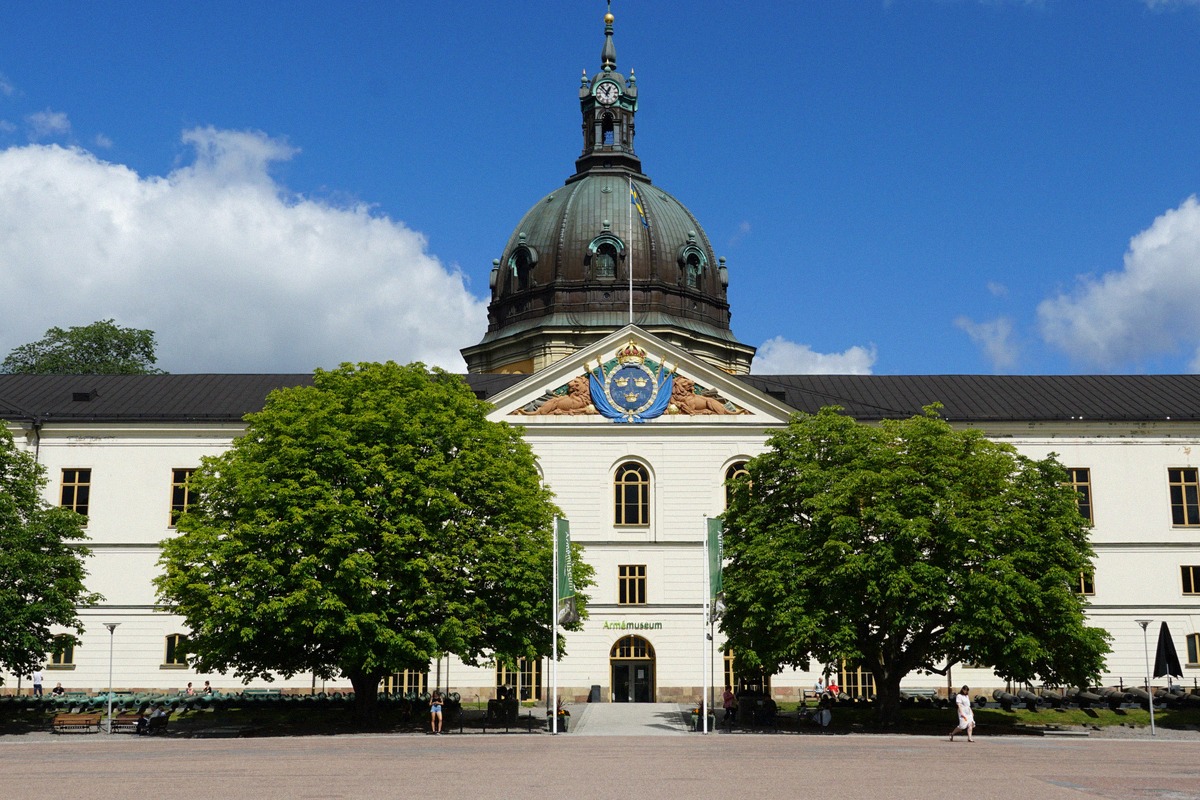
Housed in an arsenal from 1770, Armémuseum (Army Museum) tells Sweden's history of war and peace since the 16th century in recreated scenes and shows Raoul Wallenberg's Budapest office.