
Mårten Trotzigs gränd
Stockholm's narrowest alley in Gamla Stan
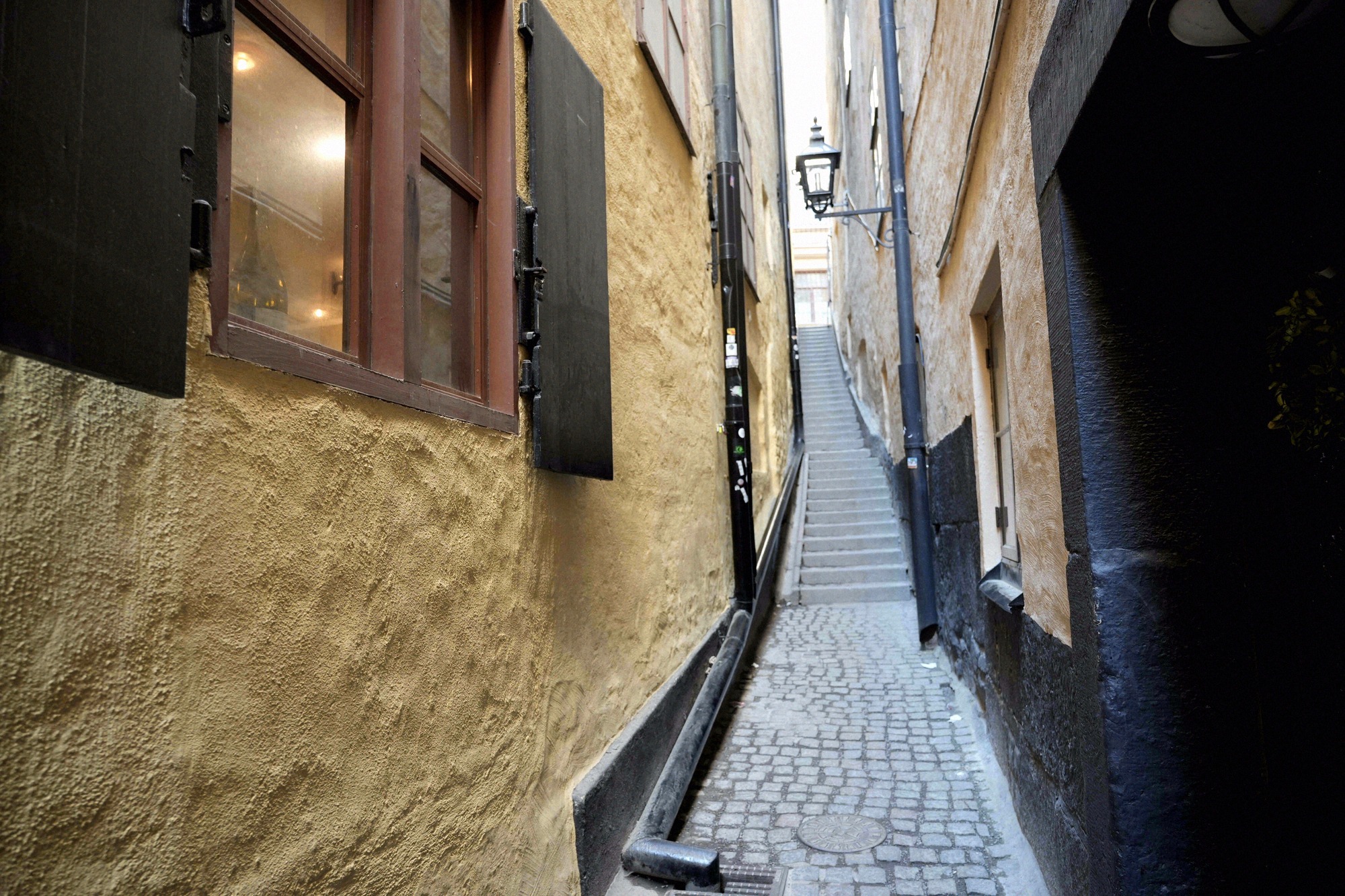
Mårten Trotzigs gränd in Gamla Stan measures 90 centimetres at its narrowest point, making it Stockholm's narrowest alley, a stepped lane of 36 steps.
Contents
Ninety centimetres
Mårten Trotzigs gränd is the narrowest alley in Stockholm. At its tightest point it measures 90 centimetres, just enough for one person with their arms by their sides. Strictly speaking it is not a street at all but a stepped lane: 36 steps lead down from the ridge of Gamla Stan at Prästgatan to Västerlånggatan, shortly before that street ends at Järntorget.
Lanes like this were ordinary in the medieval city. They are not a curiosity but the remains of a way of building that used every square metre inside the city wall: between the merchants' houses there was room for passageways, not for streets. Mårten Trotzigs gränd is the narrowest one that has survived.
Who Mårten Trotzig was
The man behind the name was a German merchant. He came to Stockholm in 1581, traded in iron and copper and, by the end of the 16th century, was among the wealthiest traders in the city. Between 1597 and 1600 he bought several properties on both sides of the lane. Trotzig died in 1617.
The lane itself is considerably older than its name. It appears in the records in 1544 as "den tronge trappe grenden", and in 1608 as "Trappegränden" and "Trånga Trappgränden" - simply the narrow stepped lane. A version of today's name first appears on Petrus Tillaeus's city map of 1733.
Boarded up and reopened
In the middle of the 19th century the lane was boarded up at both ends and disappeared from the townscape for around a hundred years. It was reopened only in 1945, and the official street name followed in 1949. That Stockholm's best-known alley thus carries a younger name than most of the city's museums is one of the old town's quieter jokes.
What to expect
The lane is narrow, dark and usually damp; the house walls stand bare and unrendered right at the edge of the steps. Sunlight reaches in only briefly around midday, and the rest of the time it lies in shadow. For photographs, the best position is at the bottom on Västerlånggatan, shooting straight up the lane; from above it looks flatter than it is.
A few practical notes: carry your rucksack in your hand rather than on your back. In rain and in winter the steps are slippery. The lane is not accessible - it is no place for a wheelchair or a pushchair. And since two people can barely pass each other, early morning is the only time you will have it to yourself: from late morning onwards there is usually a short queue at the lower end.
Fitting it into an old town walk
The lane is a ten-minute detour rather than a destination in its own right. It sits naturally in the middle of a walk through the old town: from Storkyrkan and the Royal Palace south along Prästgatan, past the German Church, then down through the lane and back along Västerlånggatan to Stortorget. If you want height and a view afterwards, carry on across Slussen into Södermalm.
Frequently asked questions
How wide is Stockholm's narrowest alley? +
Where exactly is Mårten Trotzigs gränd? +
What does a visit cost? +
Who was Mårten Trotzig? +
Nearby
Jewish Museum
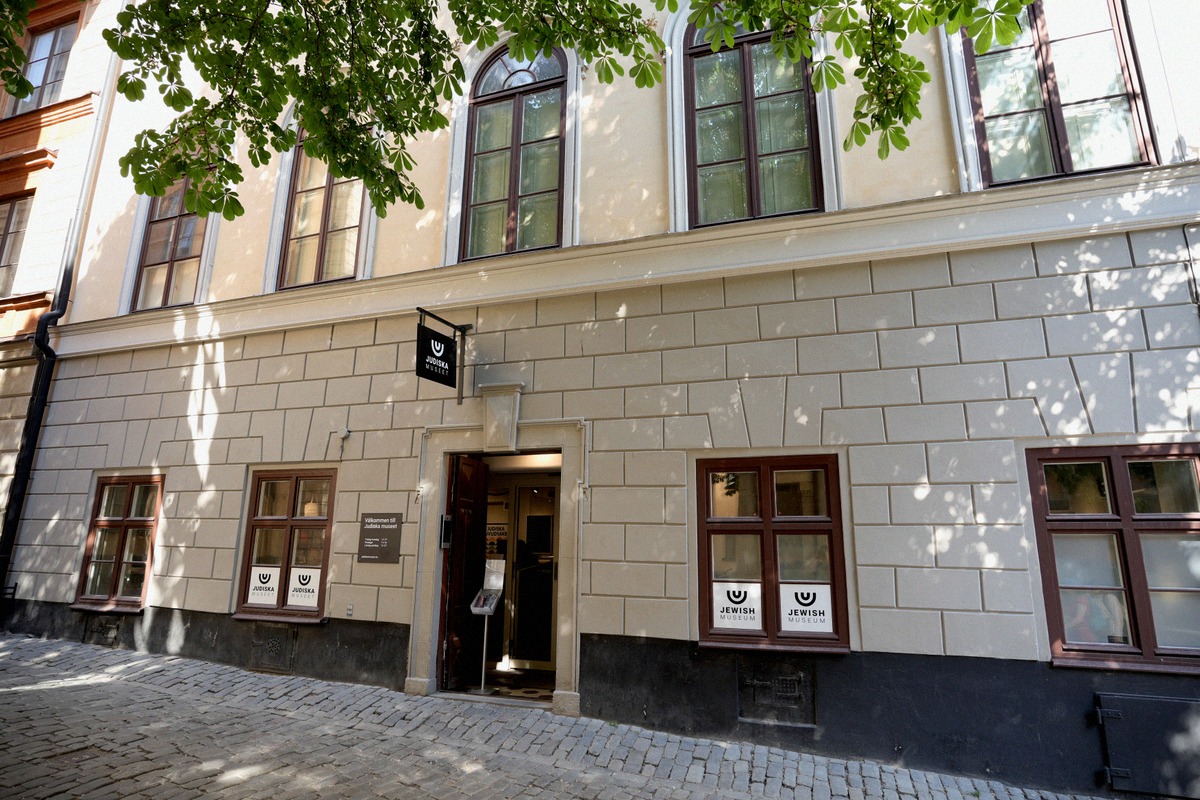
Judiska museet in Gamla Stan tells Sweden's Jewish history inside the city's oldest surviving synagogue, with the permanent exhibition The Jews & Sweden.
German Church
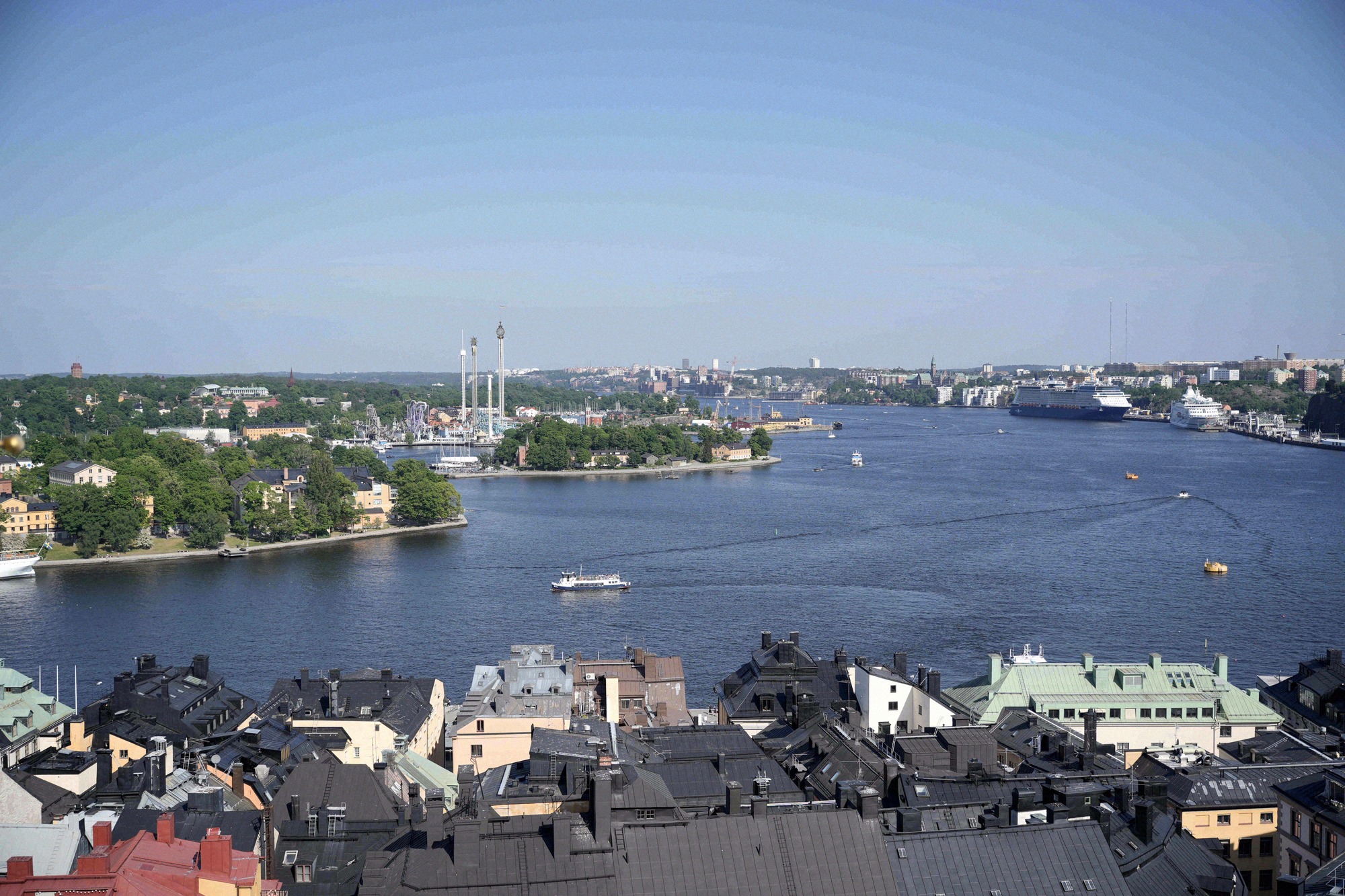
The German Church of St Gertrude in Gamla Stan has housed the oldest German congregation abroad since 1571; its 96-metre tower is the tallest building on the old town island.
Nobel Prize Museum
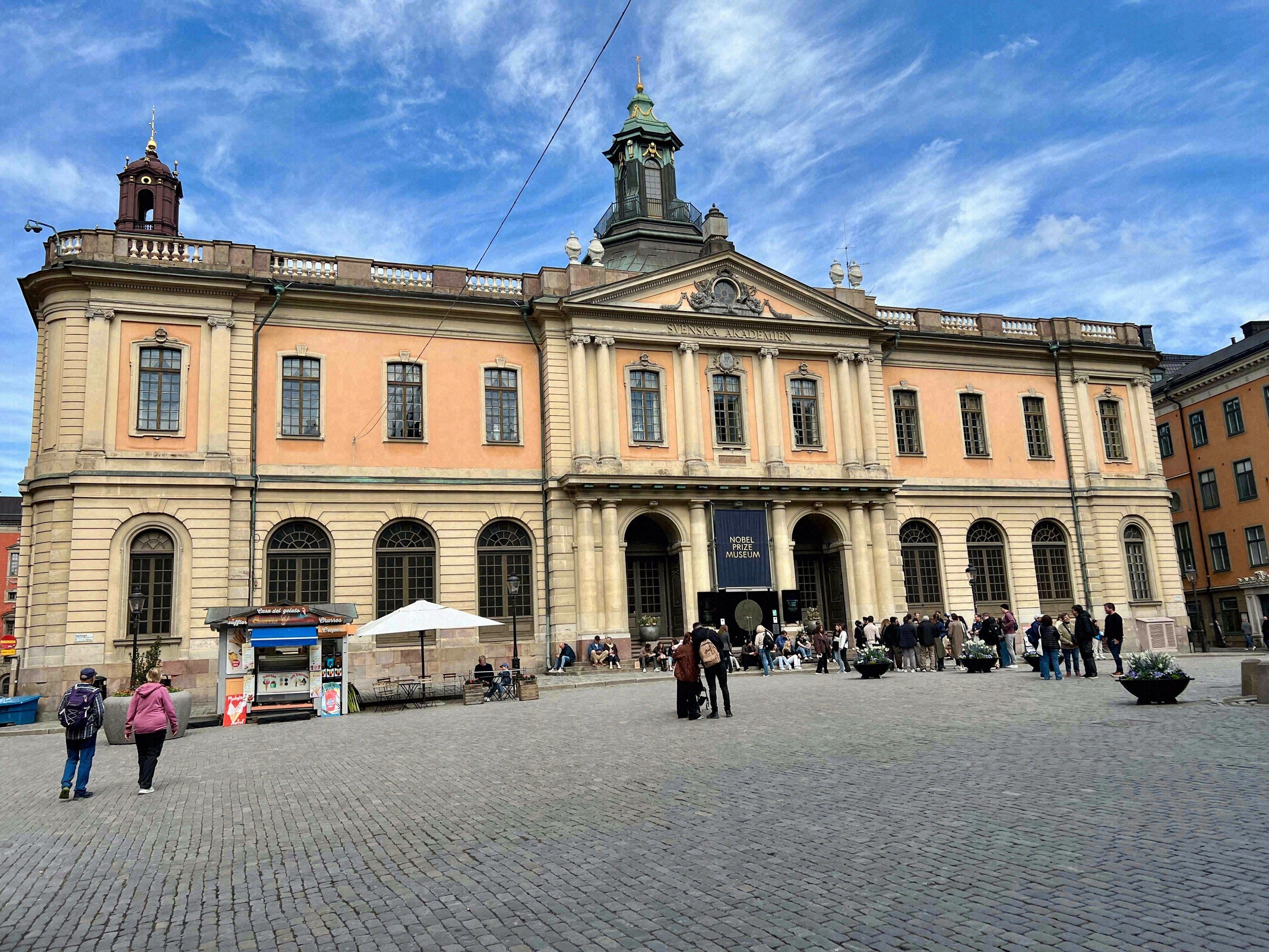
The Nobel Prize Museum on Stortorget in Gamla Stan celebrates Alfred Nobel and the Nobel laureates since 1901, with films, an overhead gallery and Café Satir.
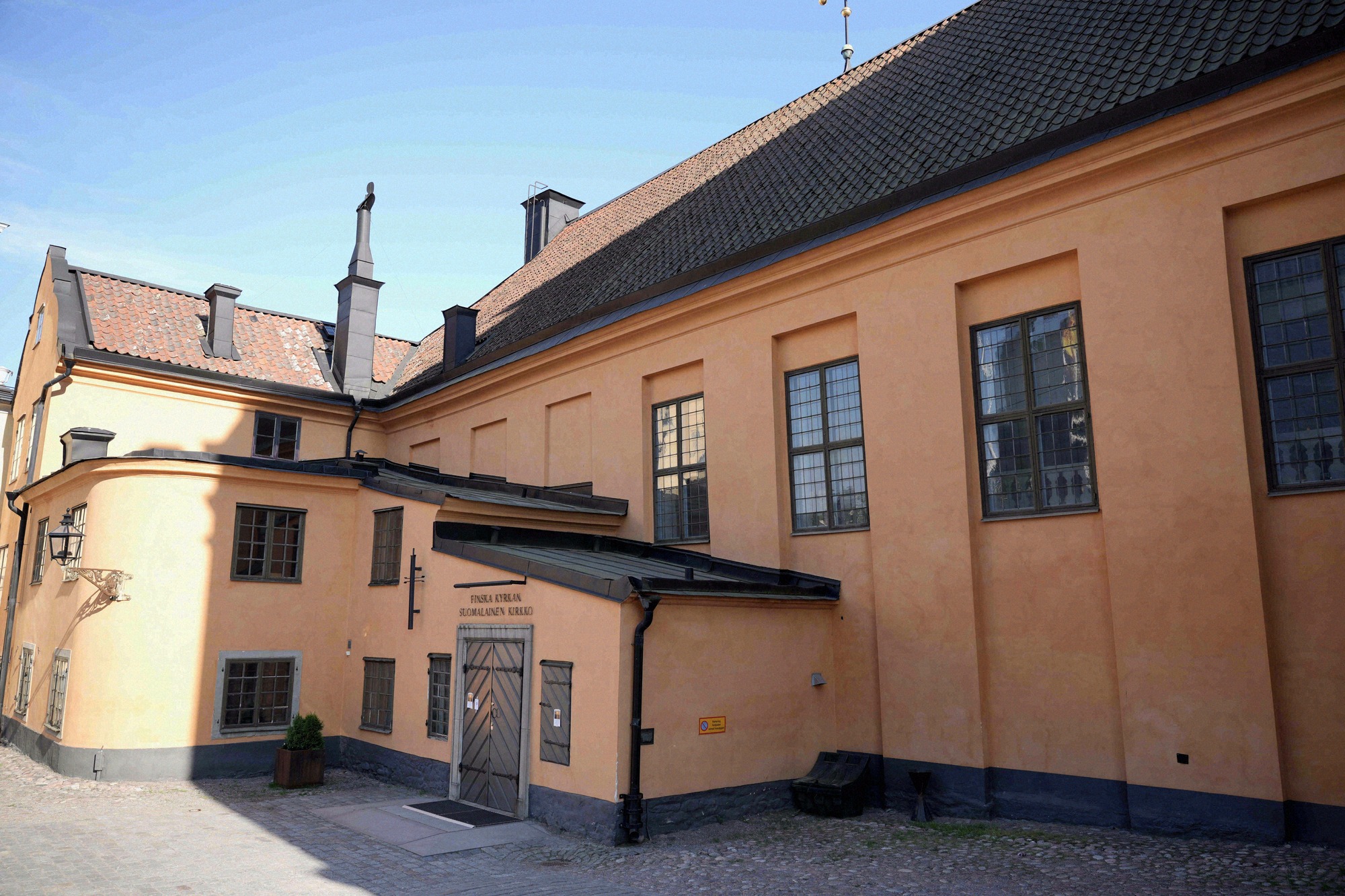
Finska kyrkan
Finska kyrkan (the Finnish Church, officially Fredriks kyrka) is a quiet Baroque church in Gamla Stan, facing the Royal Palace, with the tiny Järnpojken in its courtyard.
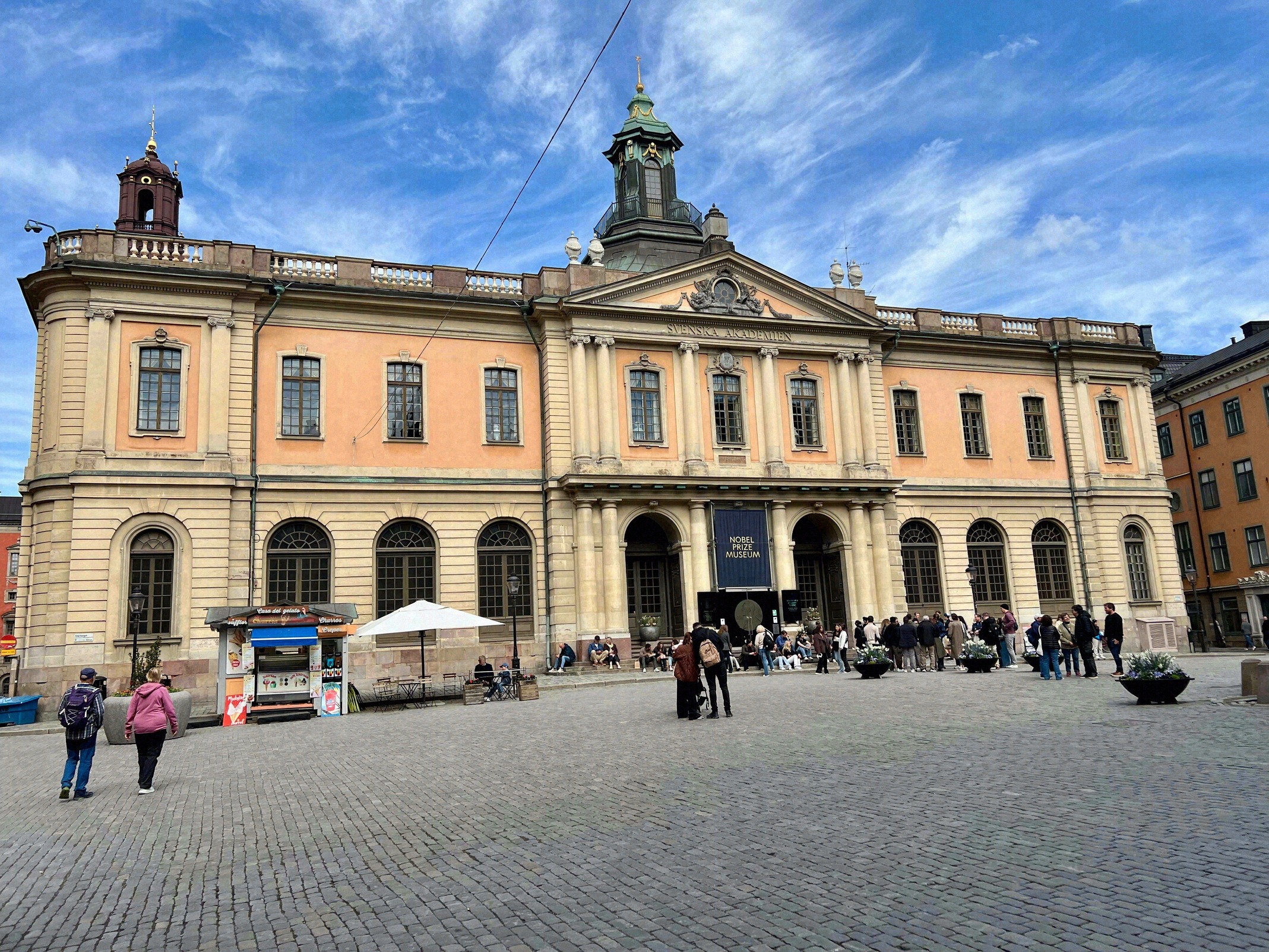
Stortorget
Stockholm's oldest square, in the heart of Gamla Stan, lined with colourful gabled houses and the Nobel Prize Museum, scene of the 1520 Stockholm Bloodbath.
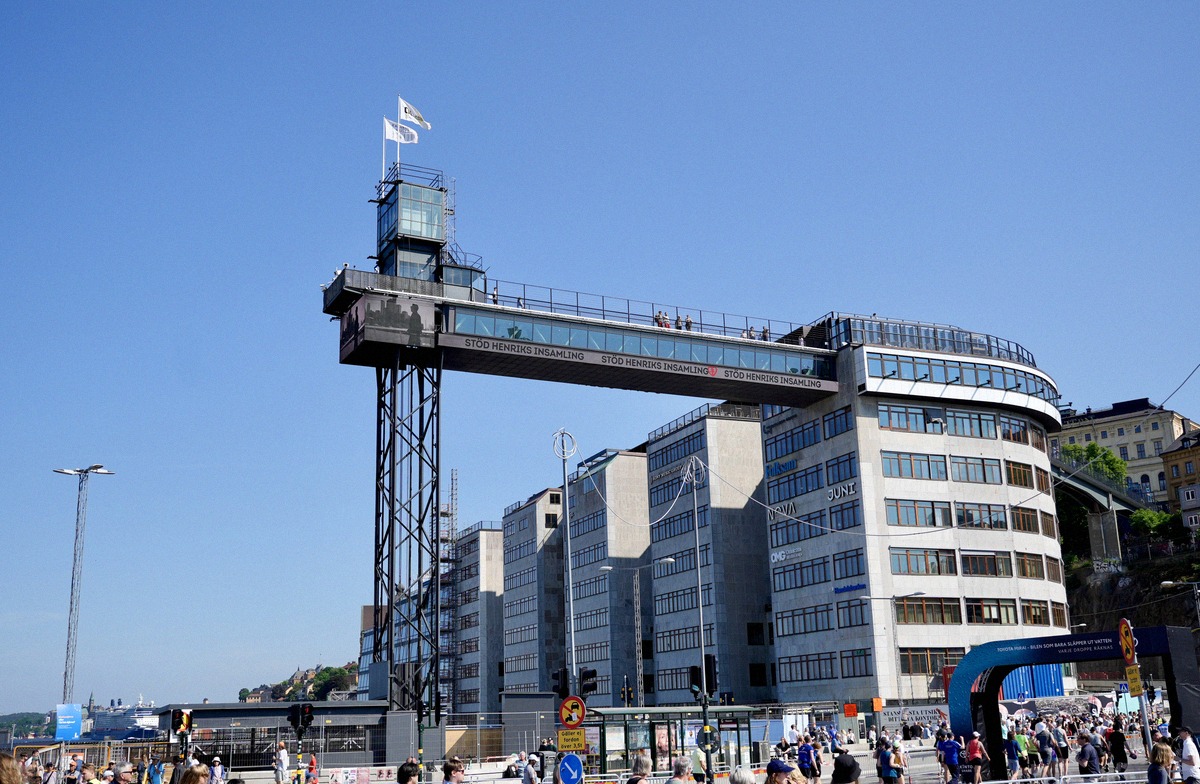
Katarinahissen
A steel lift from Slussen up to a hilltop walkway over Södermalm, with panoramic views over Gamla Stan, the harbour and the water. Ride and view are free.