
Norrmalm
City centre with Central Station, Sergels torg and museums
Stockholm's city centre north of the old town: Central Station and T-Centralen, Sergels torg with Kulturhuset, the pedestrian street Drottninggatan, Kungsträdgården and, on the waterfront, Nationalmuseum.
Contents
Norrmalm is the heart of Stockholm north of Gamla Stan: trains pull into the main station here, all metro lines meet here, and from here you walk to shops, concert halls and the museums by the water. It is hardly a residential area: just over 8,600 people live on its 183 hectares. If you arrive by train, want to shop or need a museum on a rainy day, start here.
From Central Station to Sergels torg
Stockholm Central opened in 1871, and with the railway the city centre shifted from the old town to Norrmalm from the 1860s onwards. Beneath the station lies T-Centralen, where the green, red and blue metro (tunnelbana) lines meet. It is one of the decorated stations featured in metro art.
Today's city centre is the result of Norrmalmsregleringen, the Norrmalm redevelopment: from the mid-1950s entire blocks were demolished and rebuilt until the protests of 1971 slowed the demolition. At its heart is Sergels torg, completed in 1968, with its sunken pedestrian level, Plattan, about 10 metres below the surrounding buildings. In the fountain at the centre of the roundabout above stands Edvin Öhrström's glass obelisk “Kristallvertikalaccent”, about 37 metres tall and erected in 1974.

On the south side of the square stands Peter Celsing's Kulturhuset, the first part of which opened in 1971. The Swedish parliament sat there until 1983, and since 1990 it has been home to the city theatre, Stadsteatern.
Drottninggatan and Hötorget
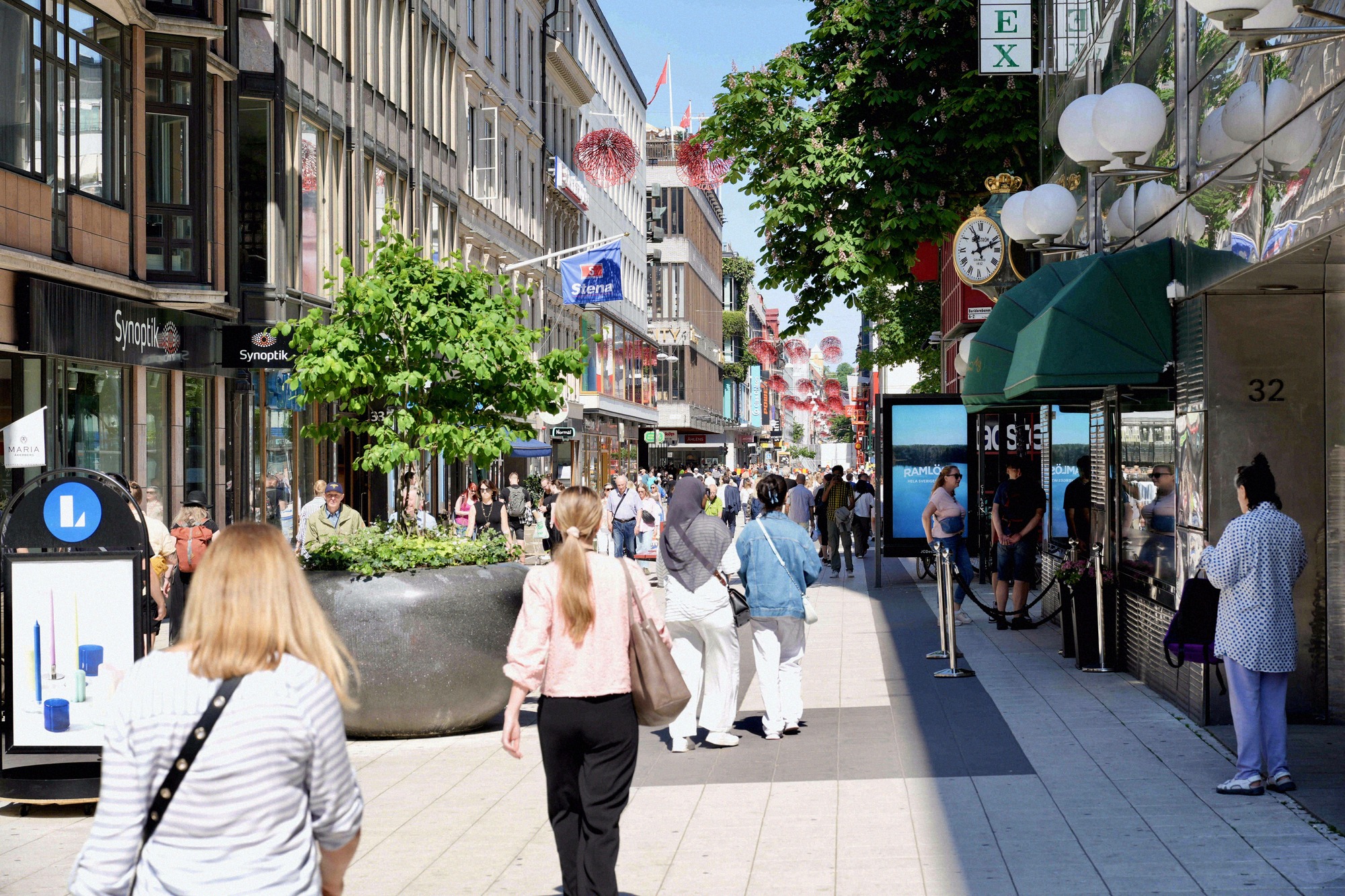
Drottninggatan runs 1.5 kilometres from the water at Norrström north to Observatoriegatan; south of Kungstensgatan it is a pedestrian shopping street. It has had its name since 1639 at the latest. At its southern end, at numbers 1-3, stands Rosenbad from 1902, the symbol of the Swedish government. Far to the north, at number 85, August Strindberg lived in Blå tornet from 1908 to 1912; his flat is now the Strindberg Museum.
Between Drottninggatan, Kungsgatan and Sveavägen lies Hötorget. On the square stands Konserthuset, built in 1923-1926 to designs by Ivar Tengbom, with Carl Milles's Orpheus fountain in front. On Sundays there is a flea market here. One level below the square is the market hall Hötorgshallen, and between Hötorget and Sergels torg rise the five Hötorgsskraporna, each 61 metres tall with 19 storeys, built between 1955 and 1962.
On Klara östra kyrkogata stands Klara kyrka, built in 1572-1590, whose tower measures 116 metres; the poet and songwriter Carl Michael Bellman is buried in its churchyard. Further north on Sveavägen, Carl Fredrik Adelcrantz built Adolf Fredriks kyrka, consecrated in 1774. Olof Palme, Hjalmar Branting and the sculptor Johan Tobias Sergel are buried in its churchyard.
Kungsträdgården, Norrmalmstorg and Hamngatan
Kungsträdgården stretches over 3.3 hectares from Hamngatan down to the water. Since its renewal in 1997-98, Japanese cherry trees have blossomed there in spring, and there has been an ice rink in the park in winter since 1962. The statue of Karl XIII has stood there since 1821, that of Karl XII since 1868, and Molins fontän since 1873. In May 1971 the park was the scene of Almstriden, the protest against the felling of its elms.
Three addresses lie close together on Hamngatan. The NK department store opposite the park opened in 1915 in a building by Ferdinand Boberg; the illuminated sign with the red clock has been turning on its roof since 1964. Further east lies Norrmalmstorg, scene of the 1973 bank robbery that gave the Stockholm syndrome its name. And at Hamngatan 4 stands the Hallwyl Museum (Hallwylska palatset), a town palace that Isak Gustaf Clason built in 1898 for the von Hallwyl couple. They bequeathed it to the state with its contents in 1920; it lies just inside Norrmalm.
Gustav Adolfs torg, Blasieholmen and Skeppsholmen
On the southern edge of Norrmalm, at the north end of Norrbro, lies Gustav Adolfs torg with the Opera from 1898, Arvfurstens palats, now the Ministry for Foreign Affairs, and the equestrian statue of Gustav II Adolf, unveiled in 1796. The stone bridge Norrbro, completed in 1797, leads across Helgeandsholmen to Gamla Stan.
East of here the peninsula of Blasieholmen juts into the water. Here stand the Grand Hôtel and Nationalmuseum, Sweden's museum of art and design, opened in 1866. Across Skeppsholmsbron you walk over to Skeppsholmen, a district of its own known as the museum island, with Moderna Museet and the architecture museum ArkDes.
Walk from Central Station to Skeppsholmen
- From Central Station along Klarabergsgatan to Sergels torg with Plattan, the obelisk and Kulturhuset.
- North along Drottninggatan to Hötorget with Konserthuset and the Orpheus fountain.
- Continue north along Sveavägen to Adolf Fredriks kyrka.
- Back south to Hamngatan with NK, Norrmalmstorg and the Hallwyl Museum.
- Through Kungsträdgården down to the water.
- Along the waterfront to Gustav Adolfs torg with the Opera, and back to Blasieholmen and Nationalmuseum.
- Across Skeppsholmsbron to Skeppsholmen and Moderna Museet.
If you only want to see the squares and streets, take a shortcut: from Hötorget straight south along Sveavägen to Hamngatan.
Metro stations in Norrmalm
T-Centralen serves all three lines. One stop further north the green line calls at Hötorget, and the blue line ends at Kungsträdgården station. Gamla stan is one stop south of T-Centralen. Tram 7 runs from T-Centralen via Kungsträdgården and Nybroplan to Djurgården. Platforms 1 and 2 at Central Station are reserved for the Arlanda Express; the airport connections are compared in from the airport to the city.
Arrival day, shopping and rainy days
Norrmalm works well for your first half day after arrival and on bad-weather days, because department stores, the market hall and museums are close together. In the evening there are performances at Konserthuset, the Opera and Stadsteatern. East of Birger Jarlsgatan begins Östermalm with Strandvägen; to the west, six bridges lead to Kungsholmen. If you want to stay here for the rail connections, you will find the comparison of districts in where to stay in Stockholm.
Frequently asked questions
What is Plattan at Sergels torg? +
When is the flea market at Hötorget? +
Is Skeppsholmen part of Norrmalm? +
Where does the term Stockholm syndrome come from? +
Which lines stop at T-Centralen? +
Around Norrmalm
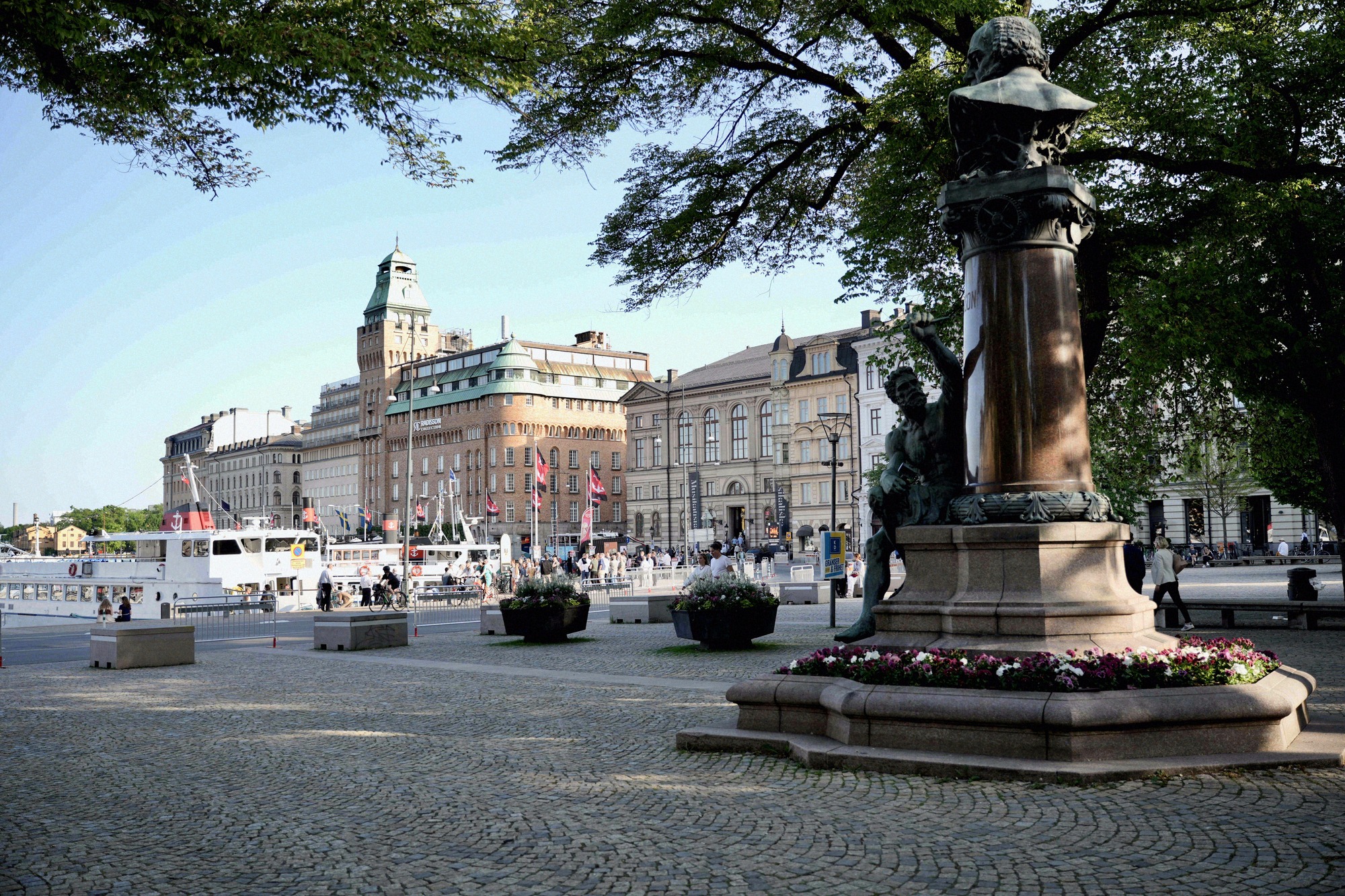
Kungsträdgården
Kungsträdgården is Stockholm's most central park and free to enter. In April its 63 cherry trees blossom, and from November to March an ice rink surrounds the statue of Karl XIII.
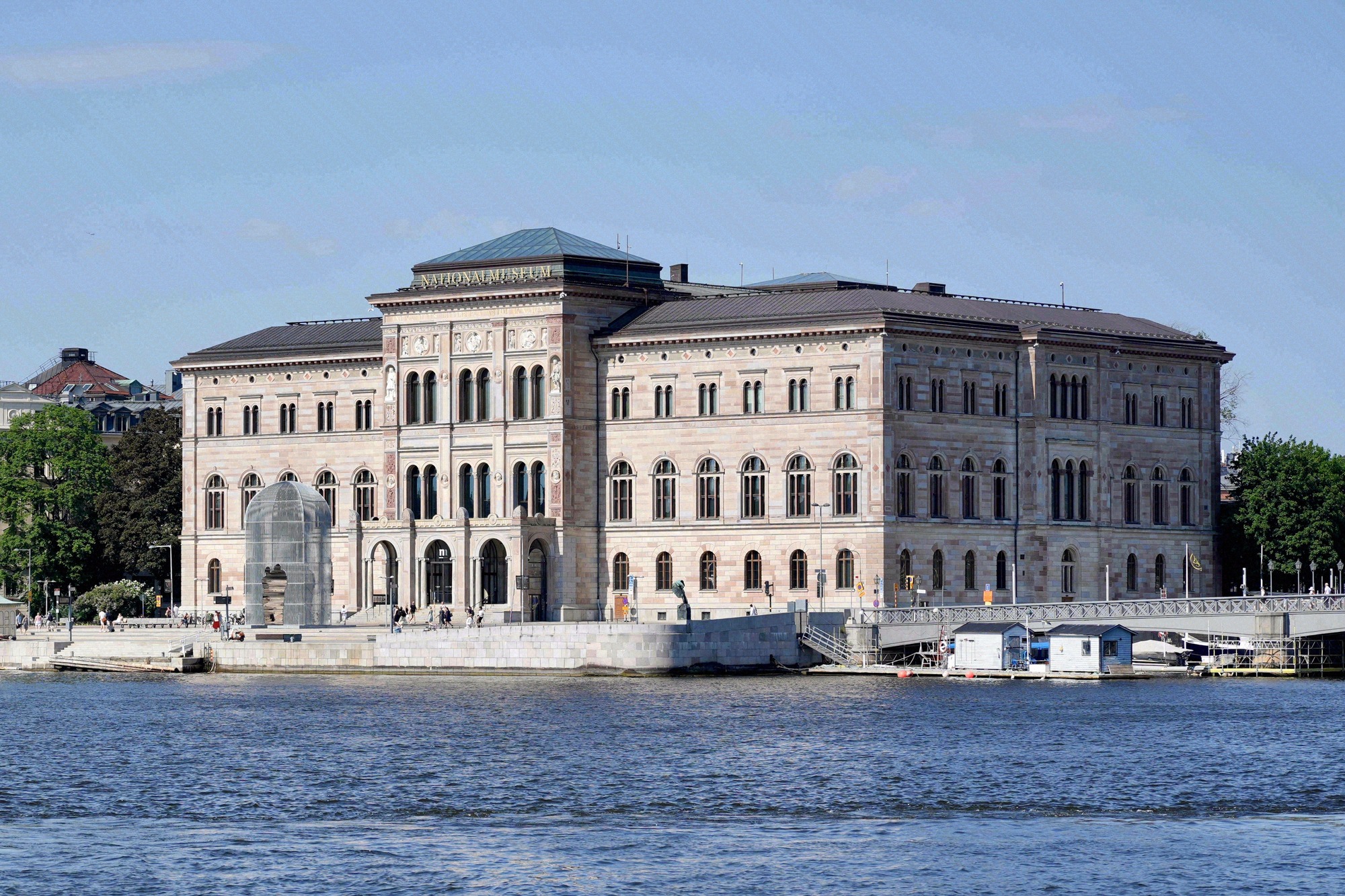
Nationalmuseum
Opposite the Royal Palace, the Nationalmuseum shows over 5,000 works from the 16th century to today and the world's largest collection of miniatures. Admission is free for under-20s.
Hallwyl Museum
Walther and Wilhelmina von Hallwyl left their 1898 town house and over 50,000 objects to the Swedish state. Standard admission covers two of the five floors; a guided tour takes you through all of them.
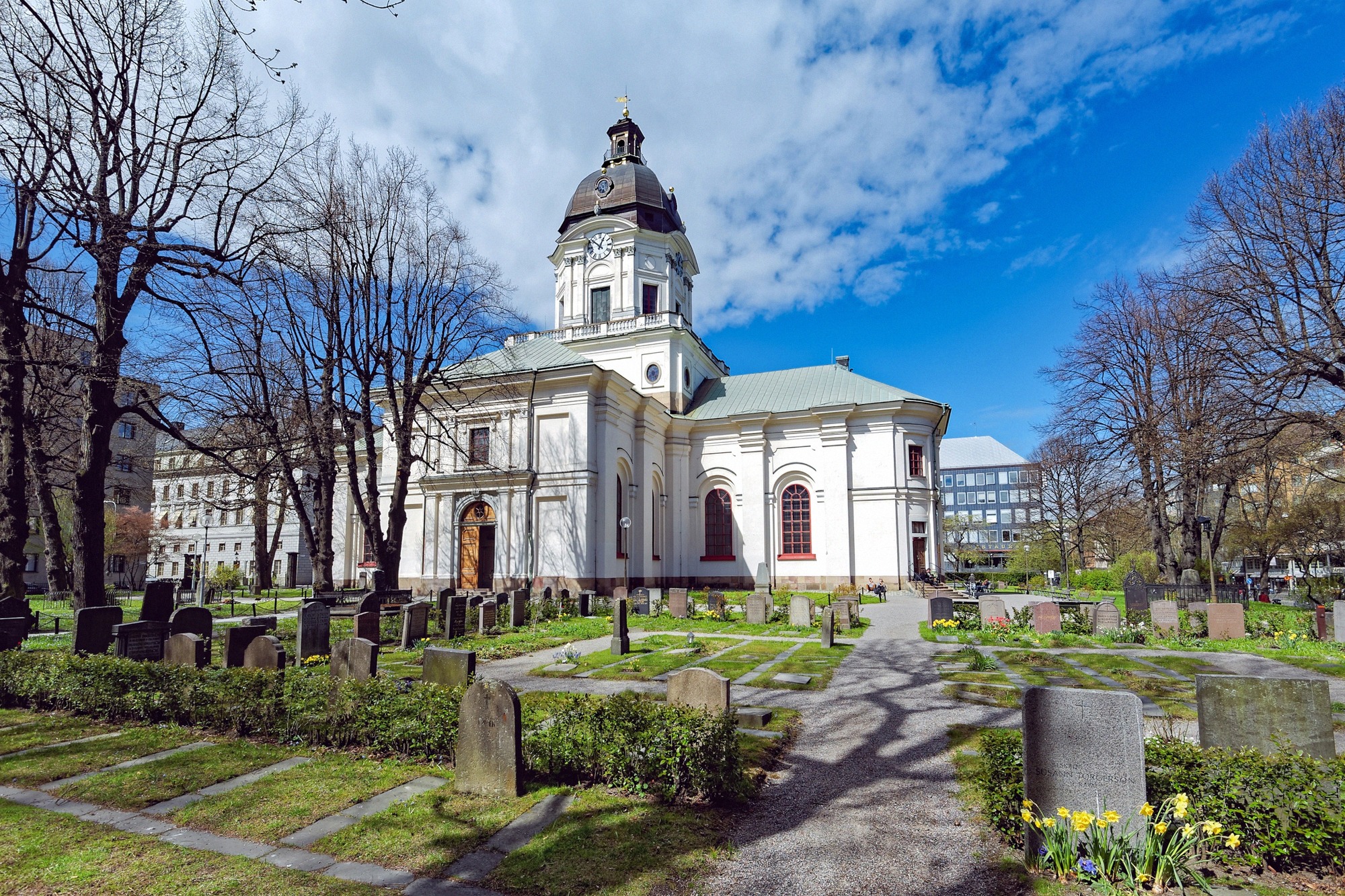
Adolf Fredriks kyrka
Adolf Fredriks kyrka on Sveavägen is a neoclassical parish church from 1774. Inside stands Sergel's Descartes monument, and Olof Palme is buried in the churchyard.
Strindberg Museum
August Strindberg lived in Blå tornet at Drottninggatan 85 from 1908 until his death in 1912. His flat is the only one of his 24 Stockholm addresses that you can visit.