
Armémuseum
War and peace since 1500 in the old arsenal on Riddargatan
A Thirty Years' War army camp, Caroleans in the mountain snow and Raoul Wallenberg's office in the old arsenal near Östermalmstorg, free for children and young people up to 18.
Contents
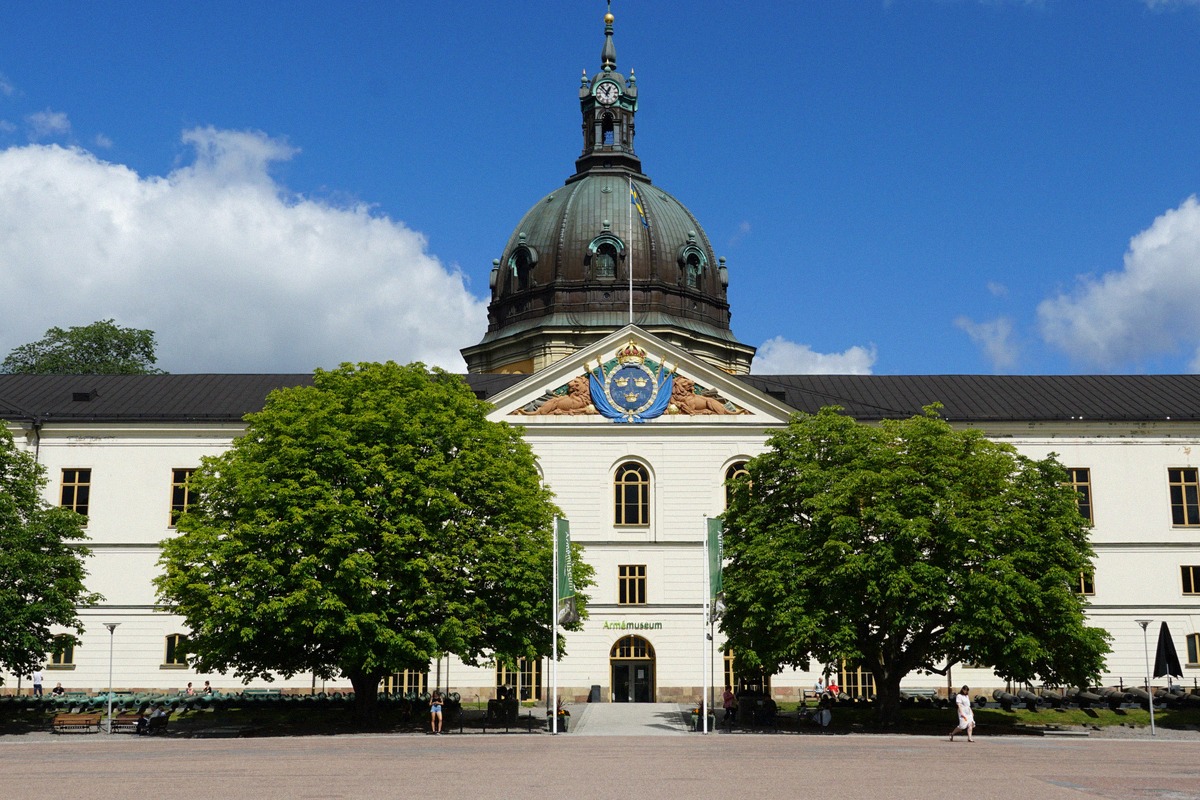
The Armémuseum (Army Museum) on Riddargatan covers Swedish history of war and peace from the 16th century to the end of the Cold War. It tells this story through soldiers and their families, in recreated scenes and personal stories. If you are interested in the Thirty Years' War, the Caroleans or Sweden in the Second World War, or want to see Raoul Wallenberg's Budapest office, this is the place for you. Adults pay 140 SEK, and admission is free up to 18.
Army camps, a cannon foundry and Caroleans in the snow
The exhibition Krig och fred 1500-1800-talet (War and Peace, 1500s to 1800s) begins in a Thirty Years' War army camp ruled by disease and hardship. Right next to it, a nobleman sits in his castle chamber, grown rich on the spoils of war. The route continues past 17th-century weapons, a model of a cannon foundry with flowing iron and a soldier's wife running the farm alone while her husband is away at war. Carolean cavalry charge into the Great Northern War, and at the end of Sweden's age as a great power, soldiers stand in the Norwegian mountain snow on New Year's Eve. Then come corporal punishment and a walk through the gunfire of the Finnish War.
Side rooms go deeper. The Sjukvårdsrummet holds the field surgeons' amputation tools, and the Trofékammaren shows captured flags and musical instruments from the 17th century. They come from a collection of around 5,000 trophies, most of them from the Thirty Years' War. The rooms Krigets rötter and Krigsbytesrummet ask why wars break out; here you also find a Soviet warhead with around 400 times the explosive power of the Hiroshima bomb.
From the First World War to the fall of the Berlin Wall
Krig och fred 1900-talet shows the Boden Fortress, known as “Nordens lås” (the lock of the North) and built against a Russian invasion, and a flamethrower from the First World War. In a living room from the folkhem years of the Swedish welfare state, the radio announces that another world war has broken out. A street scene from Stockholm's wartime preparedness years hides a couple on a bench between stacks of firewood. A long picture wall shows the horrors of the Second World War in Europe, along with a 1960s dormitory with bunk beds. A display case holds the German cipher machine G-Schreiber, whose code a Swede cracked with nothing but pencil and paper. The Cold War section, with the threat of nuclear weapons and remains of Swedish nuclear weapons research, ends with the fall of the Berlin Wall.
Raoul Wallenberg's office in Budapest
Since January 2009 the museum has had a room dedicated to Raoul Wallenberg. It recreates his office at the Swedish legation in Budapest, with sketches and drawings in his hand, his diary, his passport and the Hungarian driving licence that the Soviet Union returned to his family in 1989. His protective passports and negotiations helped save an estimated 20,000 to 30,000 people, after more than 400,000 Jews from Hungary had been deported to Auschwitz-Birkenau within two months in 1944. After his arrest by the Soviets in January 1945 he disappeared, and his fate remains unknown to this day. The adjoining hall covers Sweden in the war years and its domestic political divisions, and the wall opposite covers the destruction of Budapest, the ghettos and the camps.
Uniform coats and cannon models at 1:8 scale
Vapen & rockar traces some 200 years of weapons technology and uniform fashion in the 18th and 19th centuries, from the practical field coat to the dress uniform with tall headgear. Sabres, swords, muskets and pistols show how the matchlock developed, via the wheellock and the flintlock, into the percussion lock. The Modellkammaren holds cannons and vehicles at 1:8 scale that were once used to train artillery officers. Smaller rooms such as Moderna vapen and Sadelkammaren complete the tour.
The building itself also served the artillery. Carl Johan Cronstedt designed it in 1762 as an arsenal for artillery equipment; it was built from 1763 to 1770, and two floors were added later. The Artillery and Engineering College trained its officers in the building. In 1879 the Artillery Museum opened here. It closed for rebuilding in 1932 and reopened eleven years later as the Armémuseum. The buildings around the Artillerigården, including the cast-iron fence on Riddargatan, have been a protected state monument since 1935. The collection holds around 100,000 objects, most of them from the 20th century. Since 2026 the museum has belonged to the Swedish state agency for maritime, transport and defence history (SMMTF).
Half price on Tuesday evenings
On Tuesdays the museum is open until 19:00, and from 17:00 admission costs 70 SEK instead of 140 SEK. On the other days it closes at 17:00, and it is closed on Mondays. On site you can only pay by card. If you want your ticket before your visit, buy it on the museum's ticket page.
For the audio guide, download the free “A Guided Tour” app in advance and bring headphones. The tracks are arranged by room, and pictures in the app help you find your way. The commentary is in Swedish and English. You can visit the museum shop and the Artilleriet restaurant on Artillerigatan without a ticket.
Behind Dramaten, a few steps from Östermalmstorg
Take the metro's red line to Östermalmstorg and use the “Östermalmstorg/Sibyllegatan” exit. The museum is directly behind the Royal Dramatic Theatre, Dramaten. The nearest bus stop is Nybroplan, served by lines 54, 69 and 76, and tram 7 also passes nearby. The museum has no visitor car park; only museum vehicles park in the Artillerigården.
For lunch, Östermalms Saluhall is less than 200 metres away as the crow flies. It is just under 400 metres to the Hallwyl Museum (Hallwylska palatset), the Hallwyl family's town house from 1898 with all its furnishings. If you want Vikings and gold after the uniforms, walk just under 600 metres as the crow flies towards Djurgårdsbron to the Swedish History Museum. For more on the area around Östermalmstorg, see the page on Östermalm.
Frequently asked questions
What age is Armémuseum suitable for? +
Can I bring a backpack or a wheeled suitcase into the museum? +
Is there a baby changing room and somewhere to eat my own food? +
Can I try things out for myself in the museum? +
When is Armémuseum least busy? +
Nearby
Östermalms Saluhall
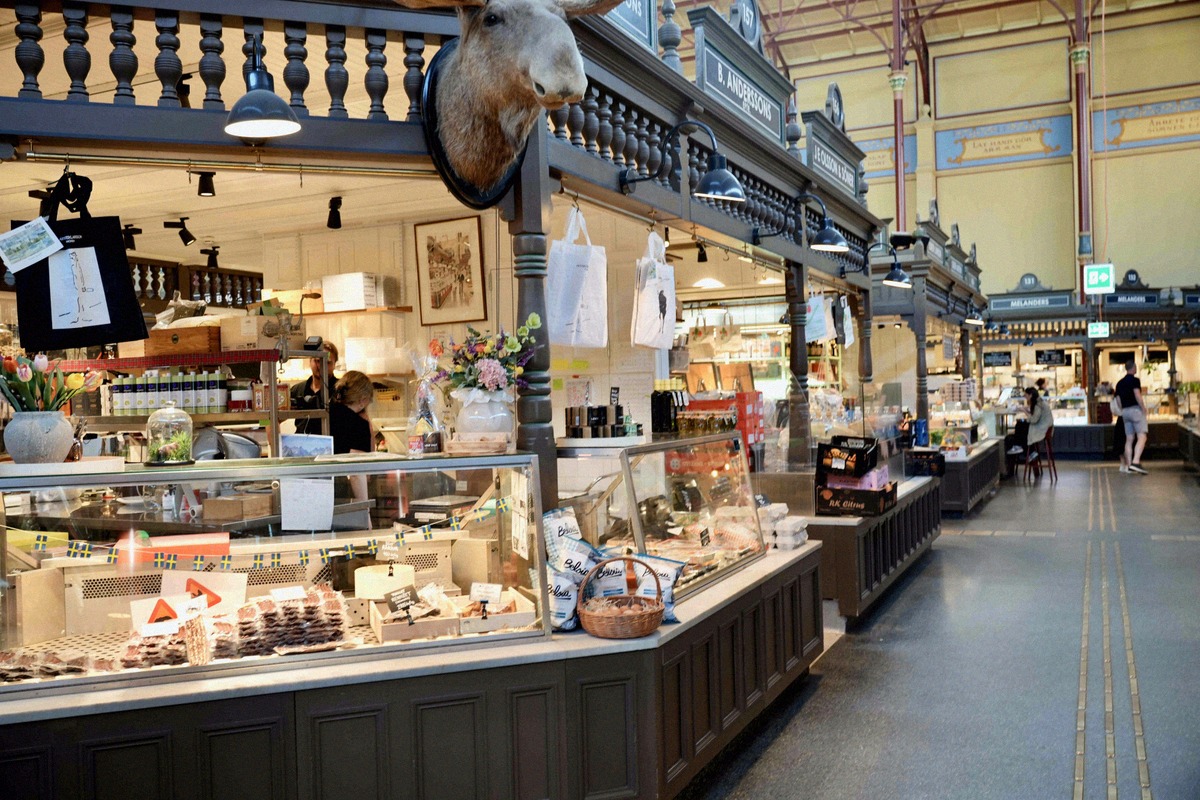
Östermalms Saluhall, dating from 1888, is a brick building with a cast-iron hall on Östermalmstorg, where 17 traders and restaurants sell fish, game, cheese, fruit and lunch.
Hallwyl Museum
Walther and Wilhelmina von Hallwyl left their 1898 town house and over 50,000 objects to the Swedish state. Standard admission covers two of the five floors; a guided tour takes you through all of them.
Swedish History Museum
Sweden's national history museum on Narvavägen shows the Viking World with 2,500 original finds and a Gold Room holding 52 kilos of gold in a vault beneath the courtyard.
Kungsträdgården
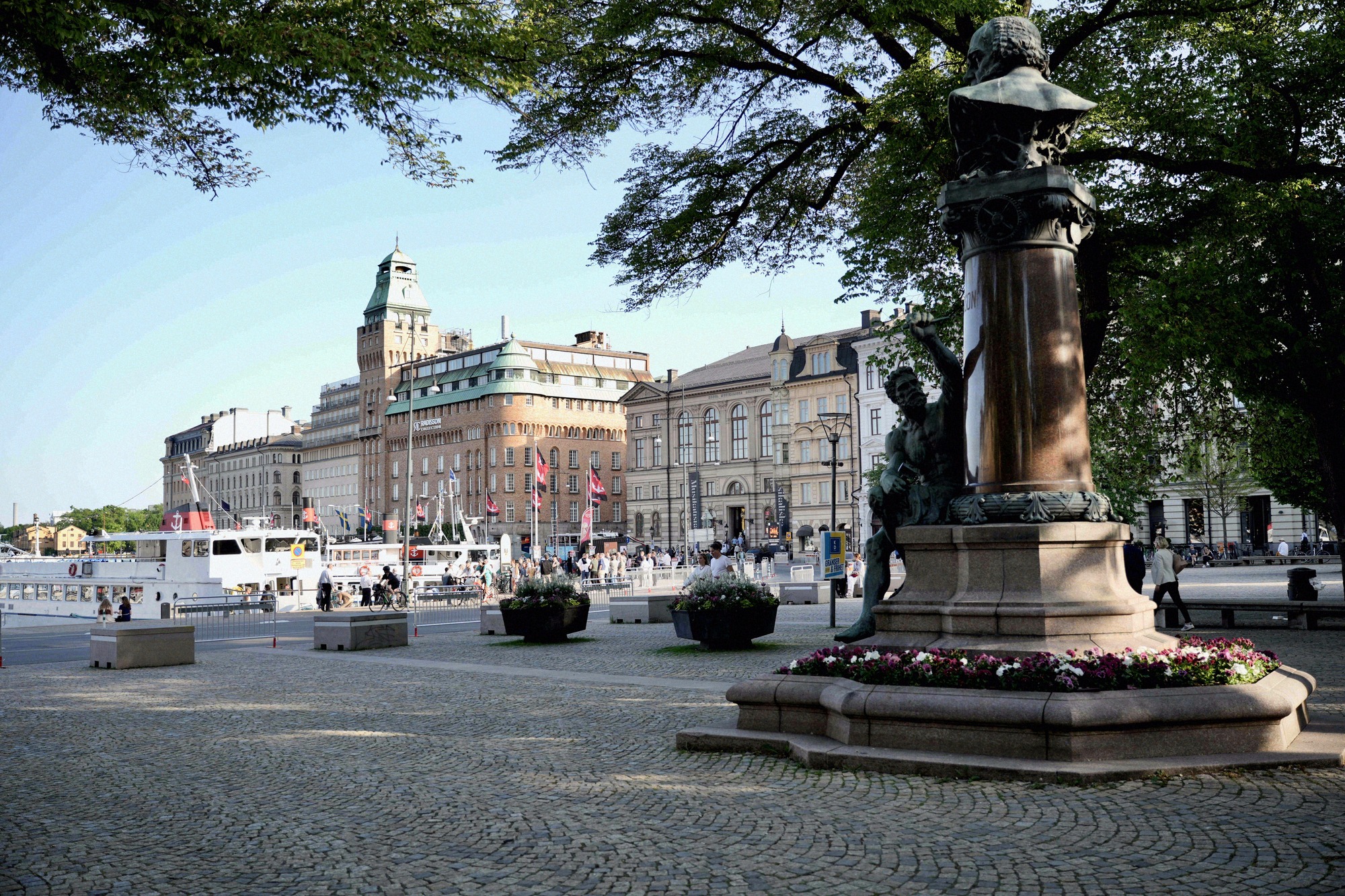
Kungsträdgården is Stockholm's most central park and free to enter. In April its 63 cherry trees blossom, and from November to March an ice rink surrounds the statue of Karl XIII.
Nationalmuseum
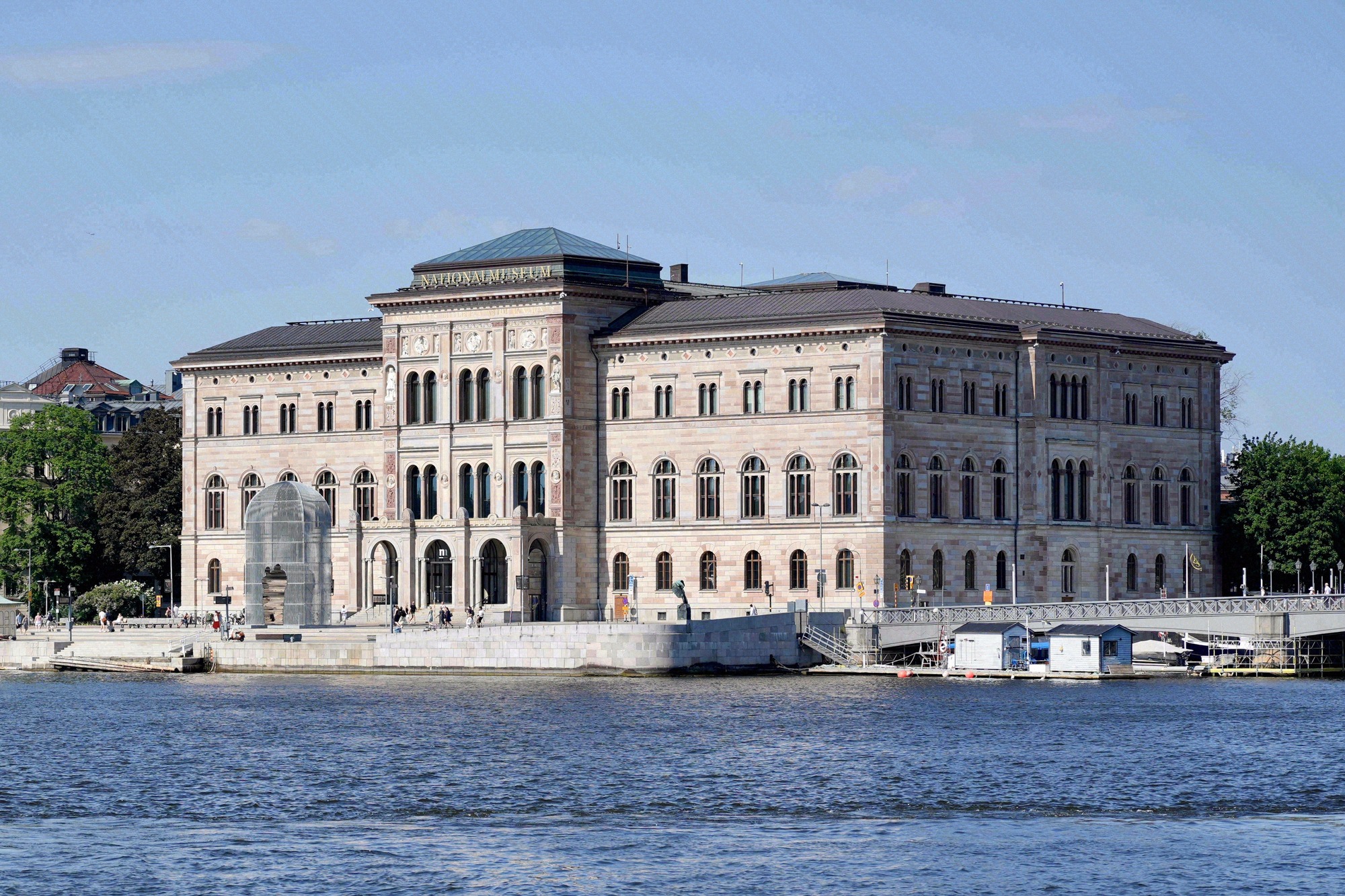
Opposite the Royal Palace, the Nationalmuseum shows over 5,000 works from the 16th century to today and the world's largest collection of miniatures. Admission is free for under-20s.
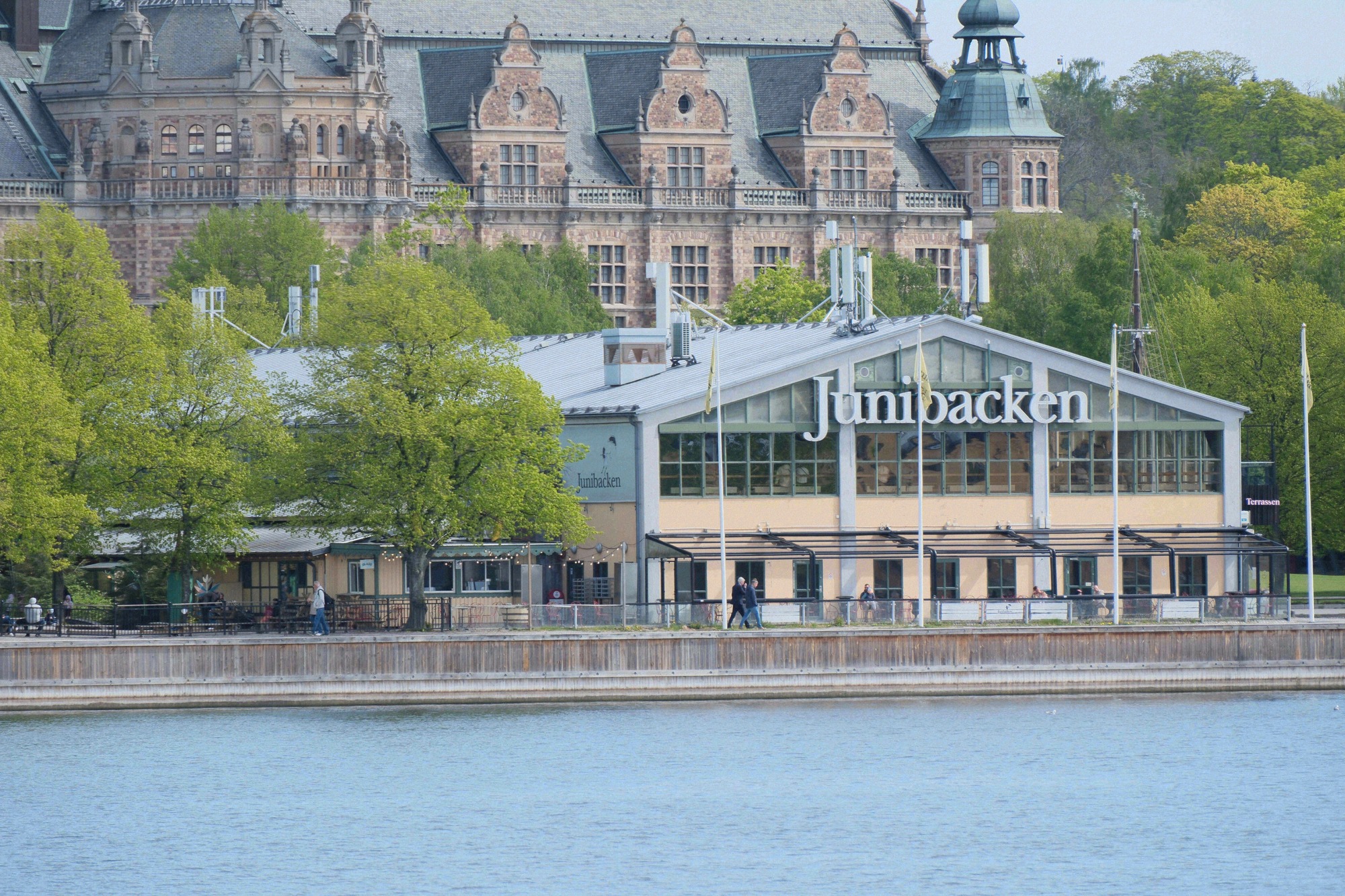
Junibacken
A storybook house on Djurgården: the Sagotåget train runs through Astrid Lindgren's stories, there's theatre at Villa Villekulla, and the Moomins wait on the story square.