Adolf Fredriks kyrka
Neoclassical church and Palme's grave in Norrmalm
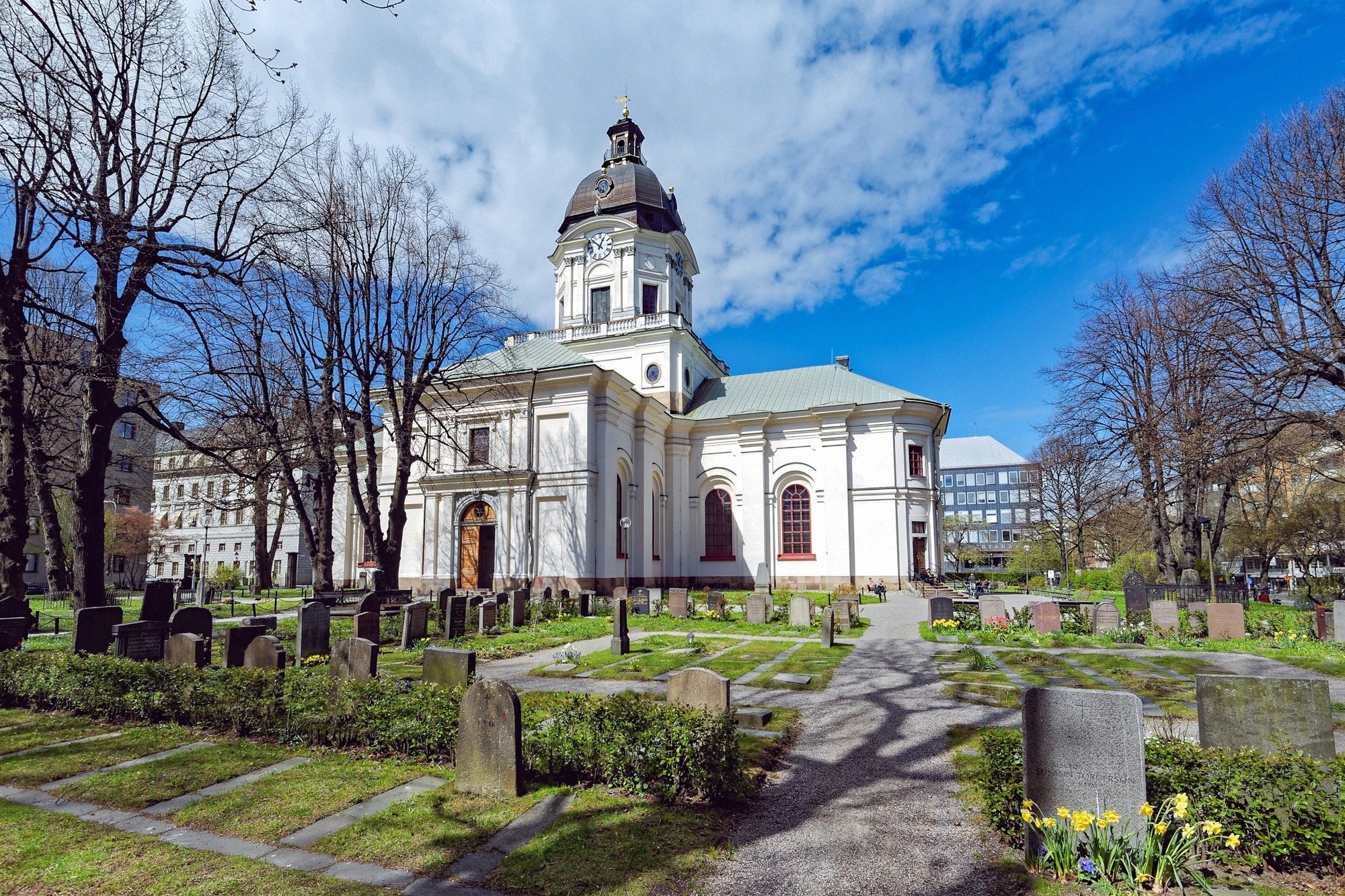
Neoclassical parish church in Norrmalm with Sergel's Descartes monument and a churchyard where Olof Palme, Hjalmar Branting and Sergel himself rest.
Contents
A neoclassical church with famous names
Adolf Fredriks kyrka is the parish church of the eponymous Church of Sweden congregation and stands in the heart of Norrmalm, at Kammakargatan 30 just off Sveavägen. Consecrated in 1774, it takes its name from King Adolf Frederick, the monarch of Holstein-Gottorp descent who laid its foundation stone.
The church is known for two things: the art inside, created by Sweden's foremost sculptor Johan Tobias Sergel, and its churchyard, where assassinated Prime Minister Olof Palme is buried, among others. As a purely religious sight it's not a headline attraction like the Royal Palace, but it's well worth the detour for a quiet stop away from the crowds.
Sergel's altar relief and the Descartes monument
Once inside, take time for Johan Tobias Sergel (1740-1814). His altar relief depicts Christ rising on Easter morning, a work created with the backing of King Gustav III.
His second major work here is the Descartes monument (Cartesius monument). The philosopher René Descartes had come to Stockholm in 1649 at the invitation of the young Queen Christina and died already in 1650, felled by pneumonia in the harsh winter. As a Catholic he was buried in what was then an outlying cemetery, which later became this church's own; his remains lay here until 1666, when they were moved to France. Sergel's monument distils Descartes' philosophy into a single image: truth as a globe, freed from the shroud of falsehood.
One common misconception is worth clearing up straight away: the dome paintings are not by Sergel, but by Julius Kronberg (1899-1900). They depict scenes from the life of Jesus and the four evangelists. Sergel is responsible for the altar and the Descartes monument, not the dome.
Architecture and restorations
The church follows a symmetrical plan in the shape of a Greek cross, topped at its centre by a tower-like dome, a building that straddles Rococo and Neoclassicism, known in Sweden as the Gustavian style.
The interior has been reworked several times: 1893-95 by Agi Lindegren, 1957-59 with a return to a plainer character (Kronberg's dome was kept), and 1996-97 with an interior restoration under Uno Söderberg, during which the altar relief, altar and pulpit were conserved. There is no officially documented restoration under way as of 2026.
The churchyard and its graves
The publicly accessible churchyard around the church is, for many visitors, the real reason to come. Buried here are:
- Olof Palme (1927-1986), the prime minister assassinated in central Stockholm in 1986,
- Hjalmar Branting (1860-1925), Sweden's first Social Democratic prime minister,
- Johan Tobias Sergel (1740-1814), the sculptor whose works stand inside the nave,
- actor Anders de Wahl, comedian Thor Modéen, painter Elias Martin and poet Bengt Lidner.
The churchyard is freely open during the day; there are no separately documented opening hours or signage marking individual graves. Allow a few extra minutes for a proper walk around.
Visiting: the practical details
Admission is free, as is standard for Church of Sweden churches; donations are welcome. You won't need an online ticket, it's a walk-in visit during opening hours. Only concerts and special events may be ticketed separately and carry a charge.
Watch out for the gaps in the opening hours: they mark prayers and services, during which the nave closes to visitors. The most relaxed time to visit is weekday mornings outside these hours; on Sundays, plan around the services. Thirty to sixty minutes is enough for the nave and churchyard together. Check current hours at svenskakyrkan.se.
Getting there and combining your visit
The address is Kammakargatan 30 in Norrmalm, at the junction with Sveavägen. The nearest Tunnelbana (metro) station is Rådmansgatan, around five to six minutes on foot; it's also just a short walk from Hötorget.
The location fits neatly into a wider walk around Norrmalm: the park Kungsträdgården and the city centre are within walking distance. If you're collecting churches, pair it with the medieval Stockholm Cathedral in the Old Town or the royal burial church Riddarholmen Church. For planning your route, see the overview guide Stockholm's attractions at a glance.
Frequently asked questions
How much does it cost to visit Adolf Fredriks kyrka? +
When is the church open? +
Who is buried in the churchyard? +
What is the Descartes monument inside the church? +
How do I get to Adolf Fredriks kyrka? +
How much time should I set aside? +
Nearby
Strindberg Museum
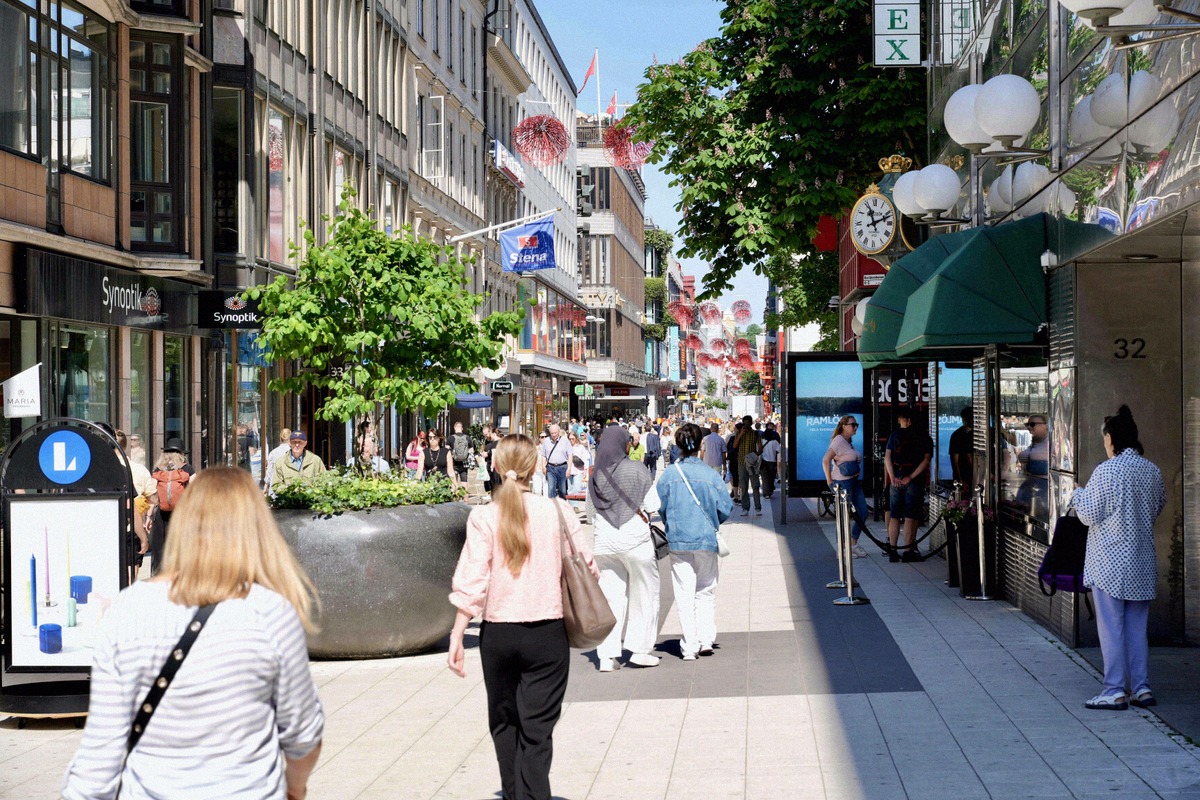
In the Blå Tornet on Drottninggatan you can walk through August Strindberg's faithfully reconstructed last home, three rooms and his library, not museum halls.
Hallwylska Palatset
A fully preserved city palace from around 1900 in Östermalm, from grand salons and a library to bathrooms with running water and a telephone, all original.
Kungsträdgården
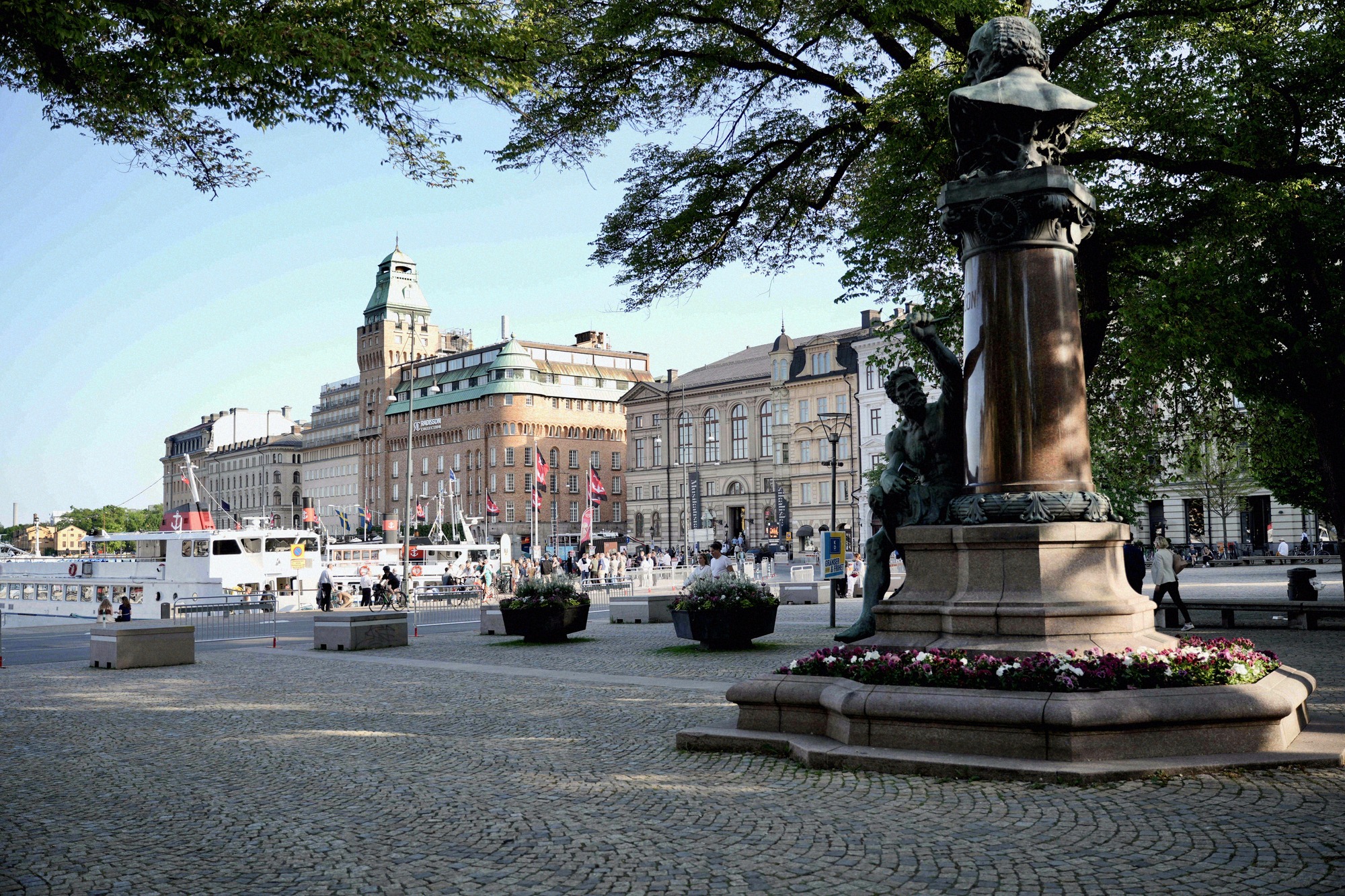
This central "King's Garden" in Norrmalm is Stockholm's green living room, a sea of cherry blossom in spring, an ice rink in winter, free to enter and full of events year-round.
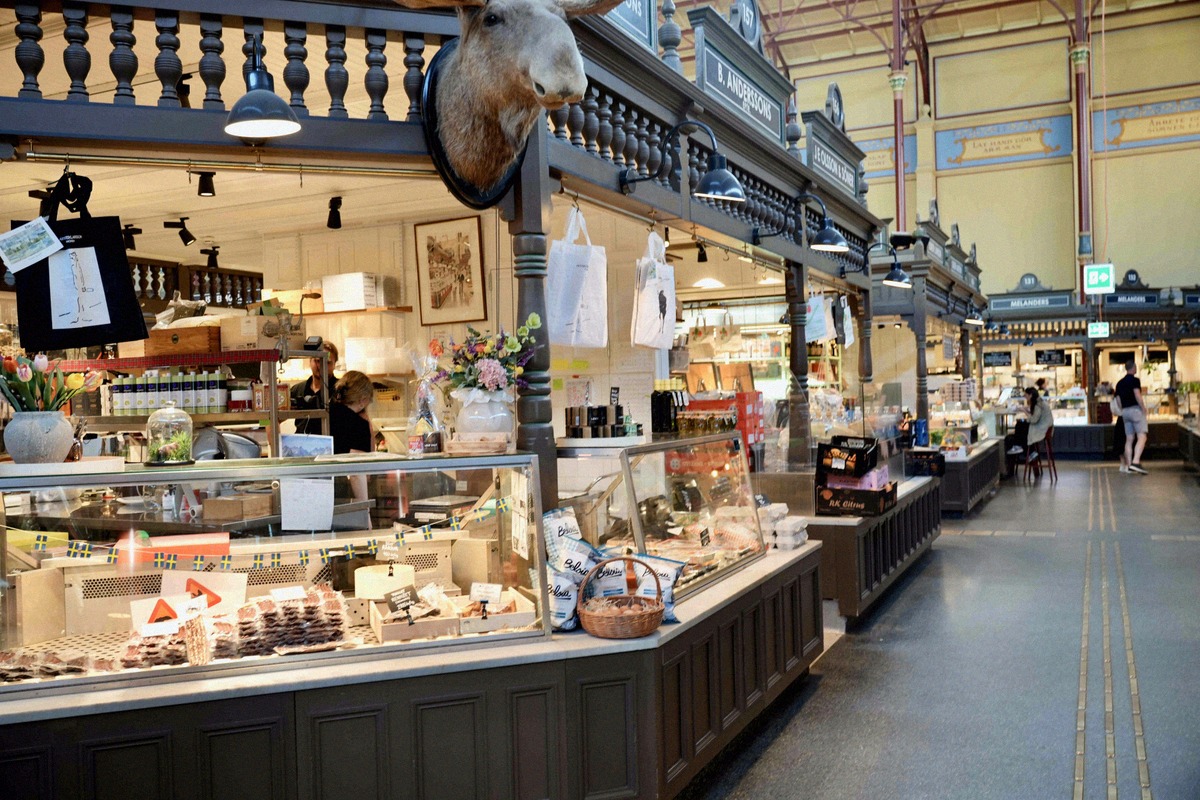
Östermalms Saluhall
Östermalms Saluhall, built in 1888 on Östermalmstorg, is Stockholm's finest market hall, with fish and game counters, cheese, confectionery and a good dozen eateries under one brick roof.
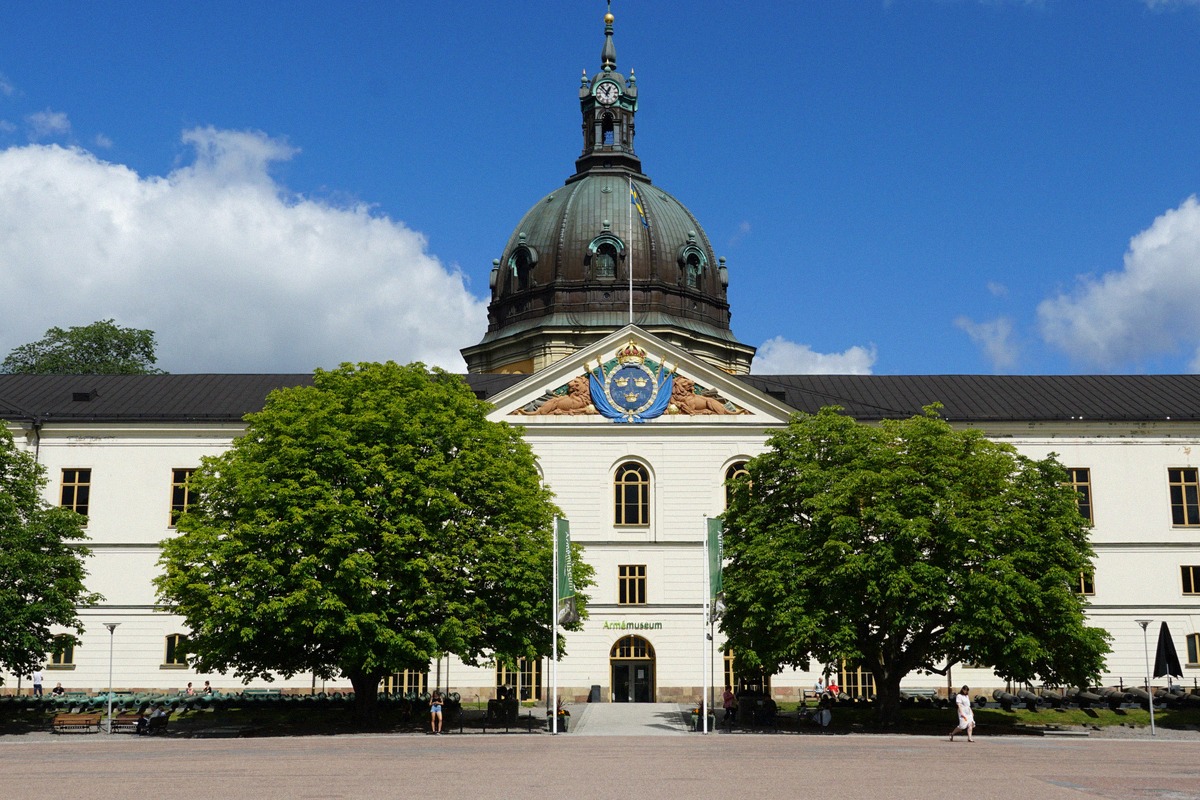
Armémuseum
Sweden's military museum in Östermalm covers military history from the 16th century to today, with over 100,000 objects and a dedicated Raoul Wallenberg room.
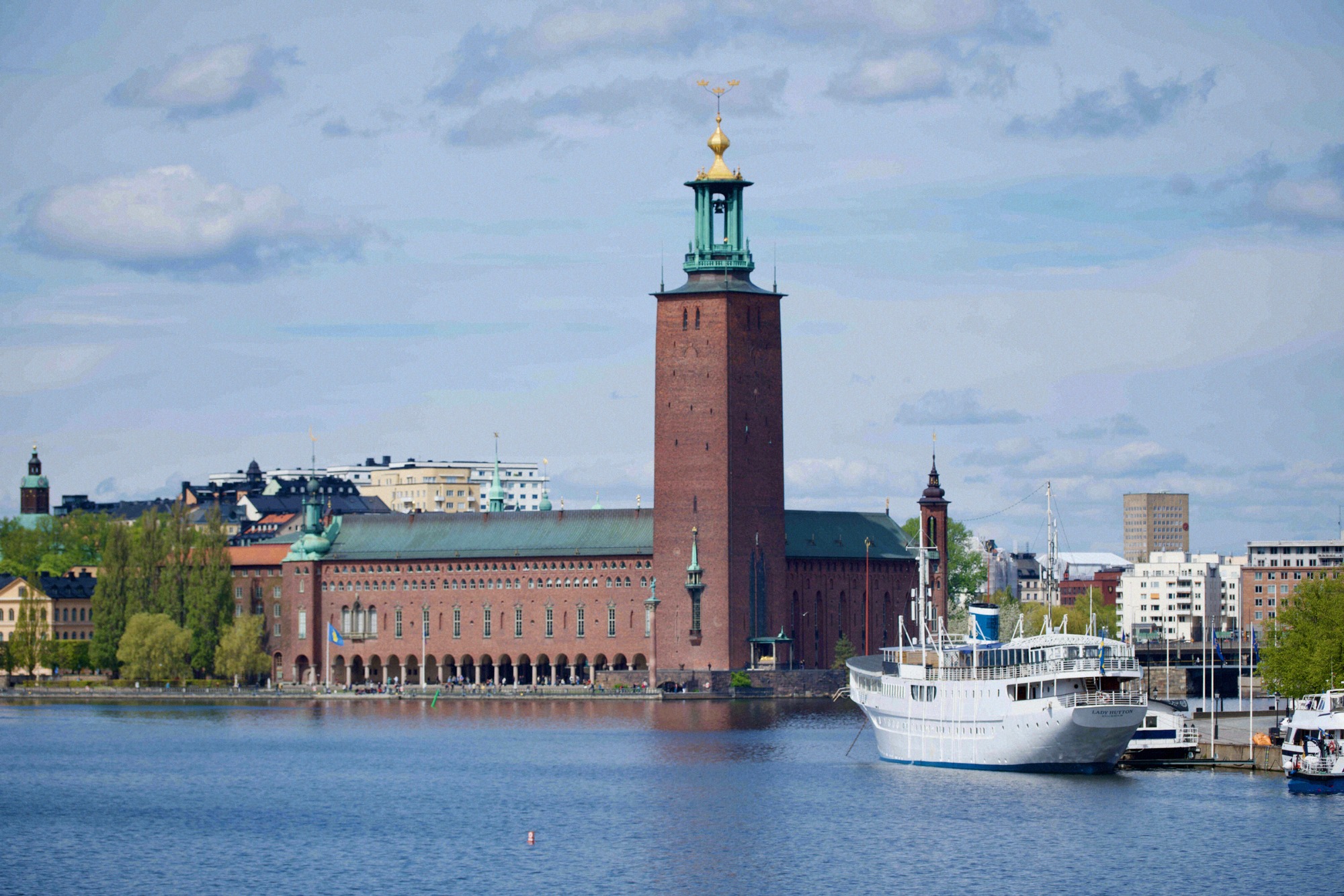
Stockholm City Hall
The waterfront brick town hall on Kungsholmen, in Swedish Stockholms stadshus: setting for the Nobel Banquet, interior by guided tour only, with a tower climb in summer.