
Stockholm City Hall
City hall on Riddarfjärden with the halls of the Nobel banquet
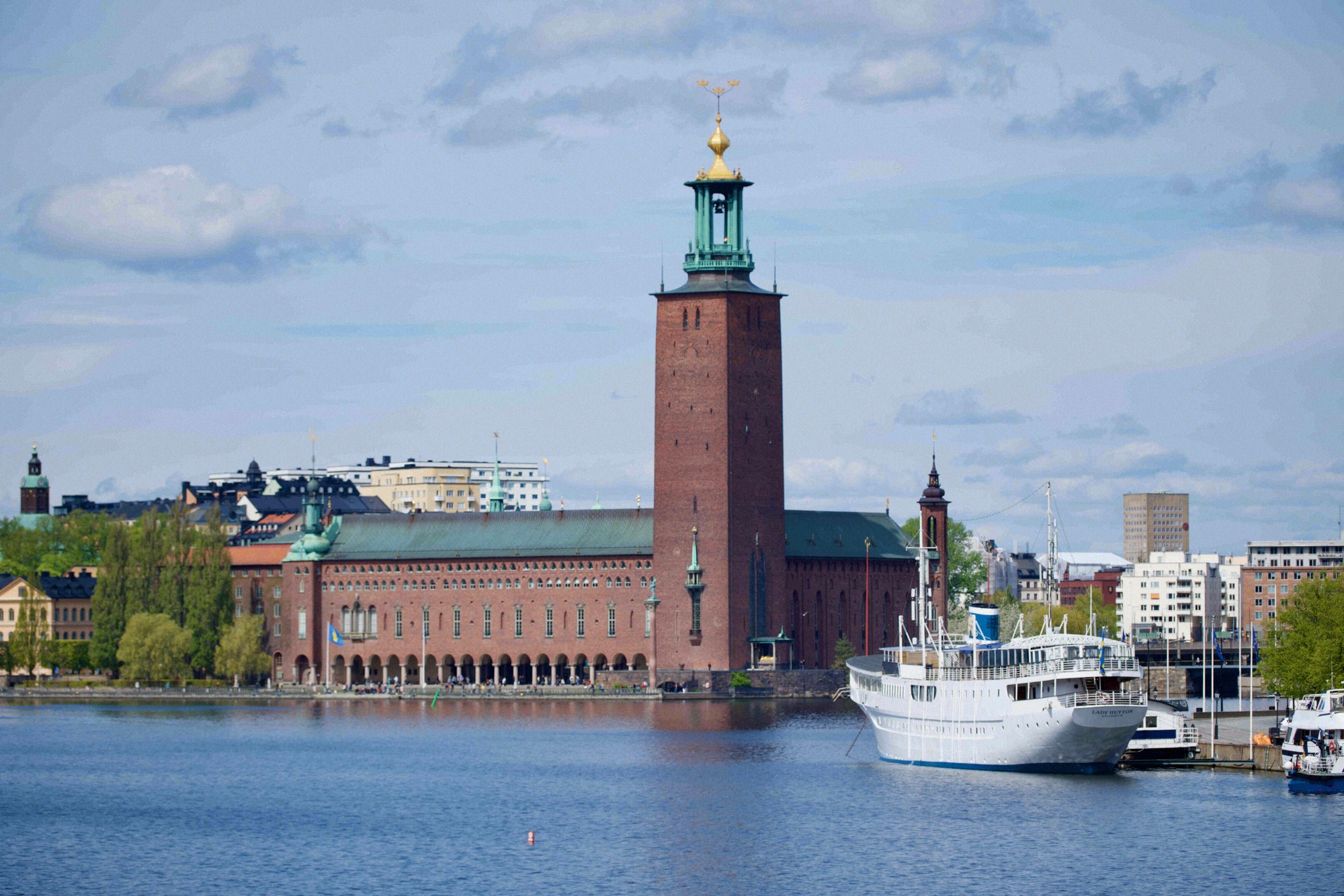
A hall of bare red brick that is still called the Blue Hall, 18.6 million mosaic pieces in the Golden Hall and a 106-metre tower topped with three gilded crowns.
Contents
Stockholm City Hall (Stadshuset) is still a working city hall: the city council meets here, couples marry here, and on 10 December the Nobel laureates sit down to the banquet in the Blue Hall. Ragnar Östberg built it in the National Romantic style from 1911 to 1923 on the eastern tip of Kungsholmen, right on Riddarfjärden. You can only go inside on a guided tour of about 45 minutes. It is worthwhile for anyone who wants to see the halls of the Nobel banquet or is interested in the architecture and crafts of the period around 1920. If you only want to see the building from outside, you don't need a ticket.
Four halls in 45 minutes
The tour takes you through the four great rooms of the building in English or Swedish. Blå hallen, the Blue Hall, isn't blue at all: Östberg left the red brick unrendered, but the name stuck. The hall has an organ with 10,271 pipes.
The city council meets in Rådssalen, the Council Chamber. Its ceiling is open to the rafters like a Viking hall, and Filip Månsson painted a sky above it. Prinsens galleri, the Prince's Gallery, has frescoes by Prince Eugen showing the view across Riddarfjärden to Södermalm. On Saturdays the gallery is closed for weddings and the tour leaves it out.
In Gyllene salen, the Golden Hall, guests dance after the Nobel banquet. Around 18.6 million mosaic pieces designed by Einar Forseth cover the walls, set between 1921 and 1923 by the Berlin workshop Puhl & Wagner, using about ten kilograms of gold. The central figure is Mälardrottningen, the Queen of Lake Mälaren, as a symbol of Stockholm. You can take photos in all the rooms on the tour.
Brick, three crowns and a closed tower
From outside, brick defines the building: more than a million bricks were shaped by hand and almost seven million by machine. The tower rises 106 metres above the shore and carries three gilded crowns. The building was inaugurated on Midsummer Eve, 23 June 1923, exactly 400 years after Gustav Vasa entered Stockholm. The tower is closed for renovation.
Stadshusparken lies on the waterfront. You can have a picnic there, but food and drink are not allowed on the tour itself.
Tickets and tour times
Tickets for the tour are released online one week in advance; book your time slot in the City Hall ticket shop. For the same day, the City Hall Shop sells tickets. Its entrance is in the archway at Hantverkargatan 1, and sales start at 08:30. Hantverkargatan 1 also leads you into the courtyard, where the tours start.
In November and December, English tours start at 10:00 and on many days run hourly until 15:00; Swedish tours are usually at 12:00 and 14:00. On some days there is only the 10:00 tour. If you want to go on a particular day, book as soon as tickets are released. In December 2026 the building is closed from 6 to 11, from 24 to 26 and on 31 December.
Dining in the City Hall cellar
One floor below the halls is Stadshuskällaren, opened in 1922. The restaurant serves lunch and dinner and serves historic Nobel menus on the official Nobel porcelain. The Nobel menu must be ordered for at least two people and at least five days in advance. For coffee and lunch there is also Ragnars Skafferi.
From T-Centralen across Stadshusbron
The nearest metro (tunnelbana) station is Rådhuset on the blue line, the first stop after T-Centralen. You can just as easily walk from T-Centralen, where the green, red and blue lines stop, across Stadshusbron, the bridge linking Norrmalm with Kungsholmen. Bus 3 stops at Stadshuset. There is no parking at the building. For tickets and zones, see public transport in Stockholm.
Combining City Hall with other sights
Right next to the building, boats to Drottningholm Palace leave from the Klara Mälarstrand quay in the summer season. So you can follow a morning tour with an afternoon at the palace and its gardens.
To the west, Norr Mälarstrand runs for around 1.6 km along Riddarfjärden to Rålambshovsparken. From there you look back across the water to City Hall and Gamla Stan; for the walk across the island, see Kungsholmen. If you would rather see churches and lanes, cross the bridges to Riddarholmen Church, the burial church of the Swedish kings, and on to Gamla Stan.
Frequently asked questions
What is Stadshuset called in English? +
Which languages are the City Hall tours in? +
Can I climb the City Hall tower? +
Can I bring a backpack, suitcase or pushchair? +
Is the tour wheelchair accessible? +
Nearby
Riddarholmen Church
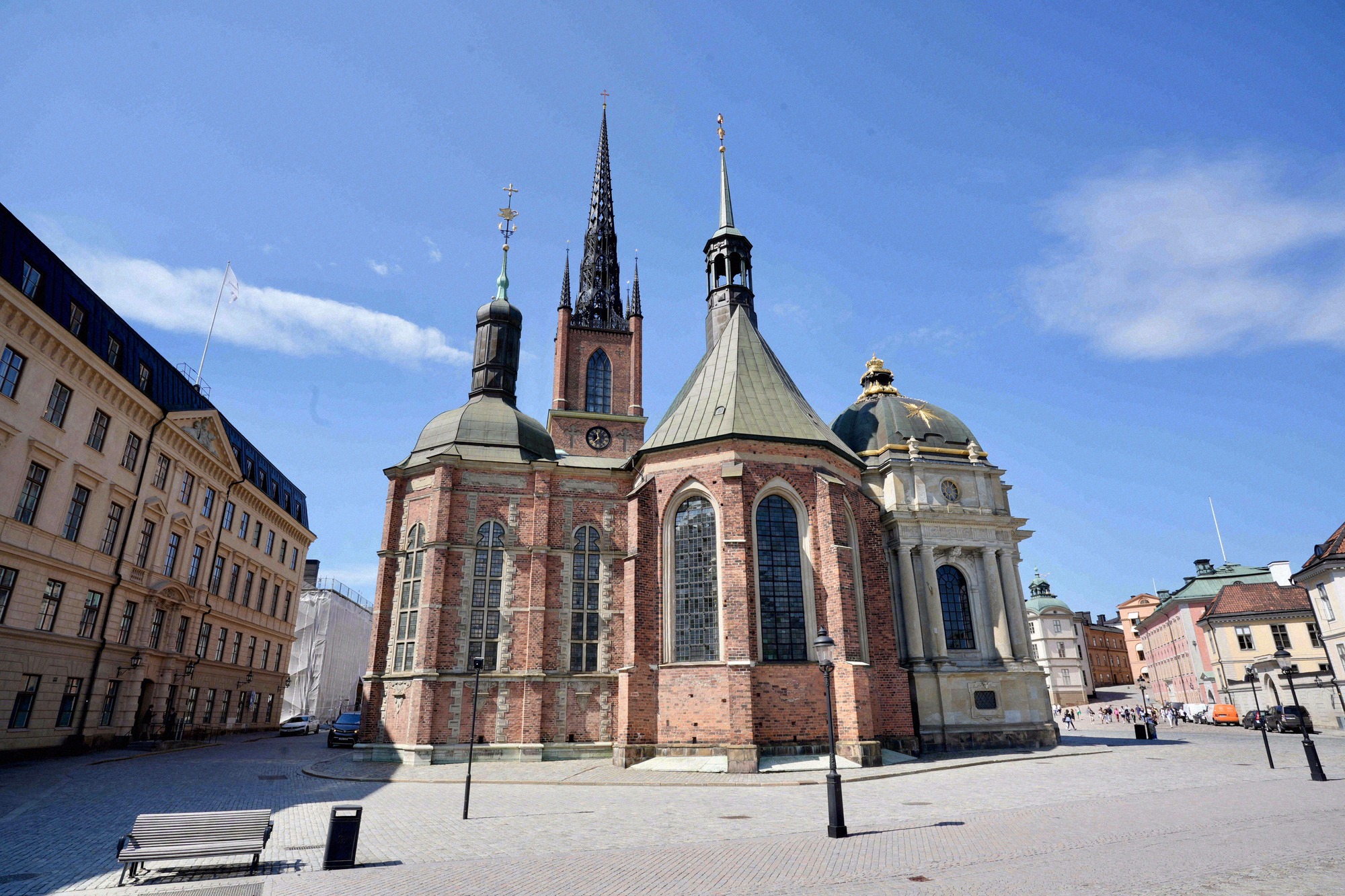
Former Franciscan church on Riddarholmen with the tombs of Swedish kings from the Middle Ages to 1950, open from May to September.
Riddarhuset
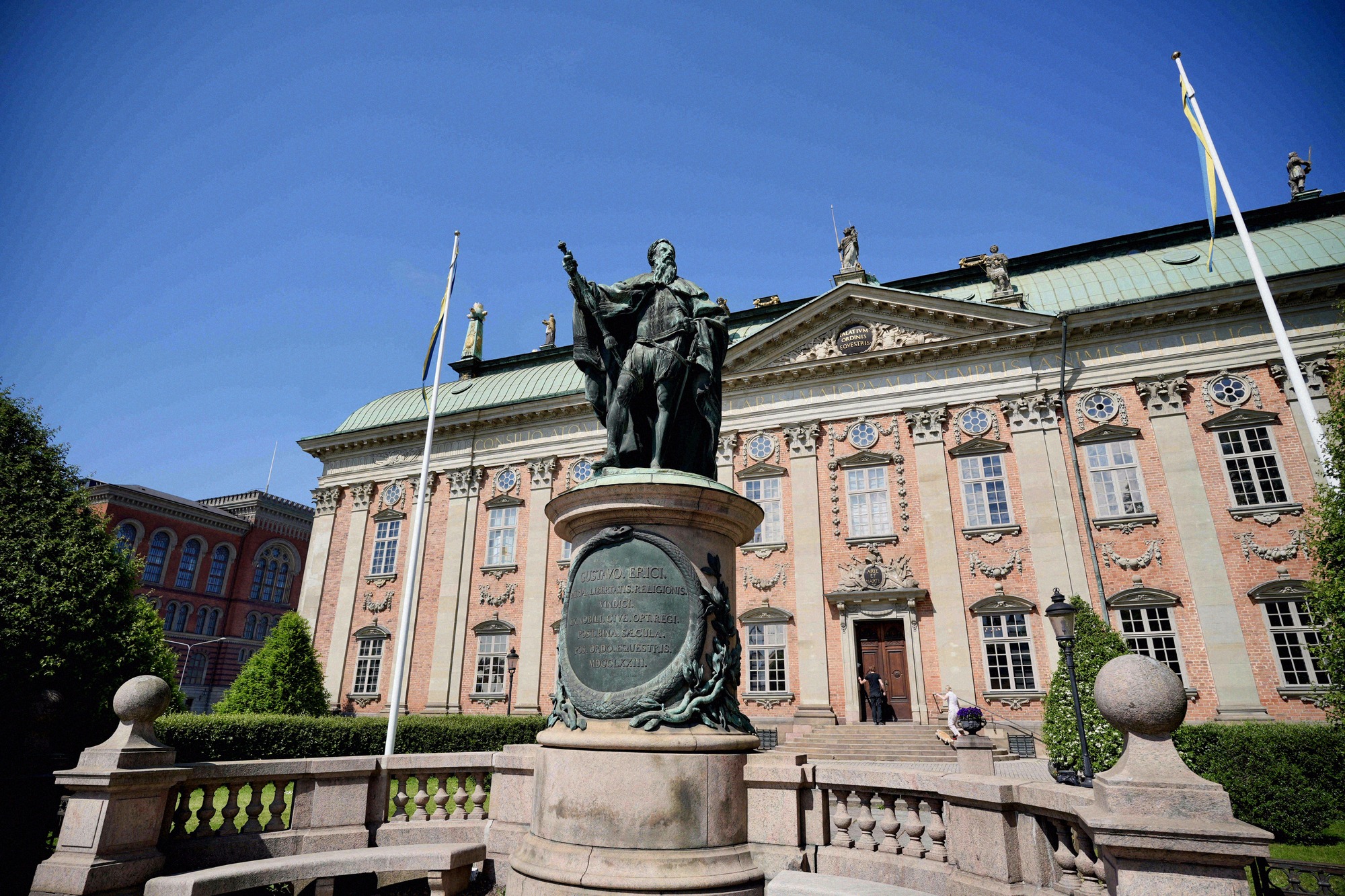
Baroque palace of the Swedish nobility on Riddarhustorget, with 2,334 coats of arms in the great hall, open to visitors on weekdays from 11:00 to 12:00.
Monteliusvägen
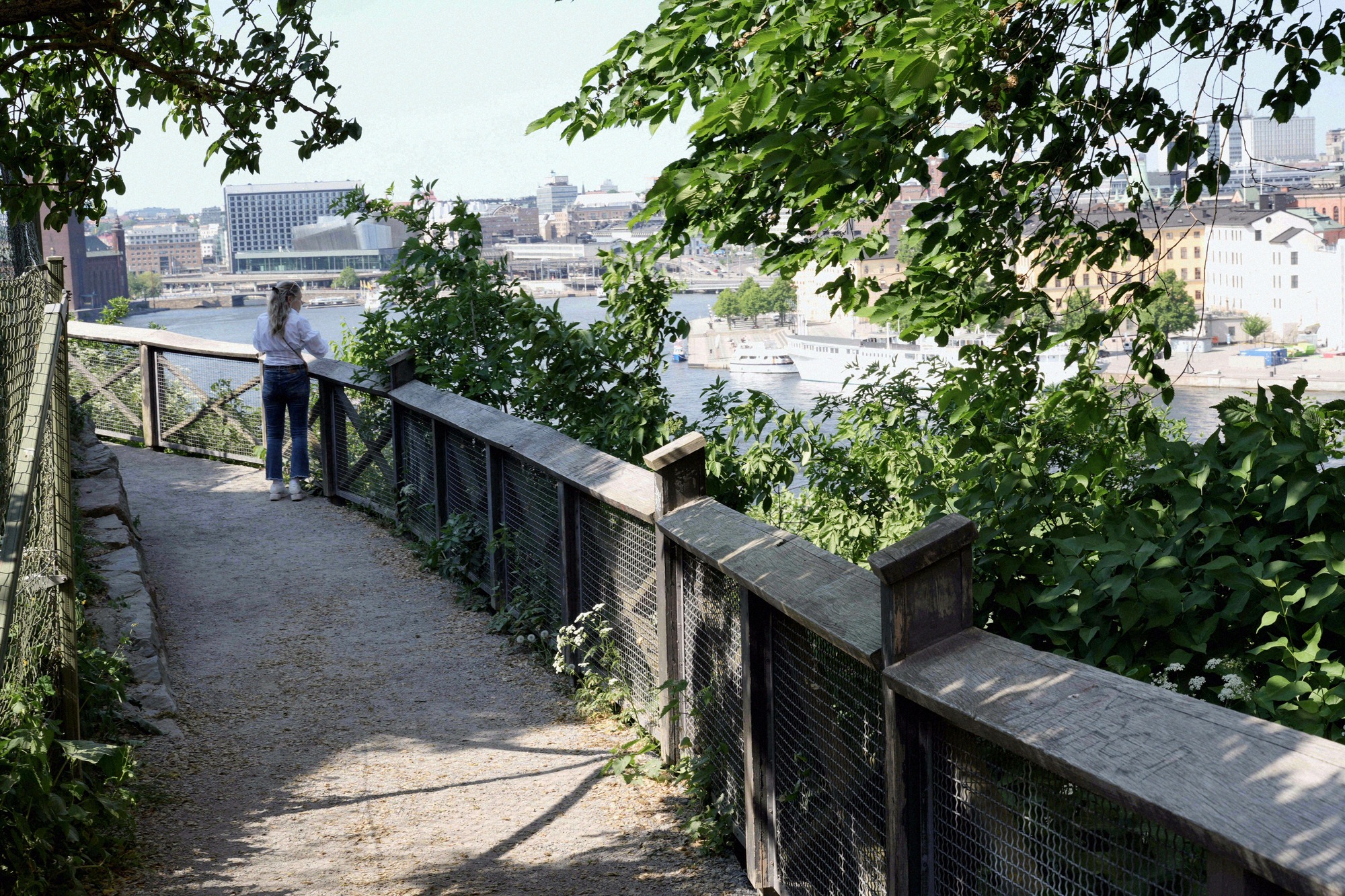
The 416-metre footpath on Mariaberget runs with a railing and terraces above Söder Mälarstrand and looks across Riddarfjärden to Riddarholmen and Stockholm City Hall.
Skinnarviksberget
The 53-metre rocky hilltop in western Södermalm is the highest natural point within Stockholm's old customs boundaries and looks across Riddarfjärden to Kungsholmen and Stockholm City Hall.
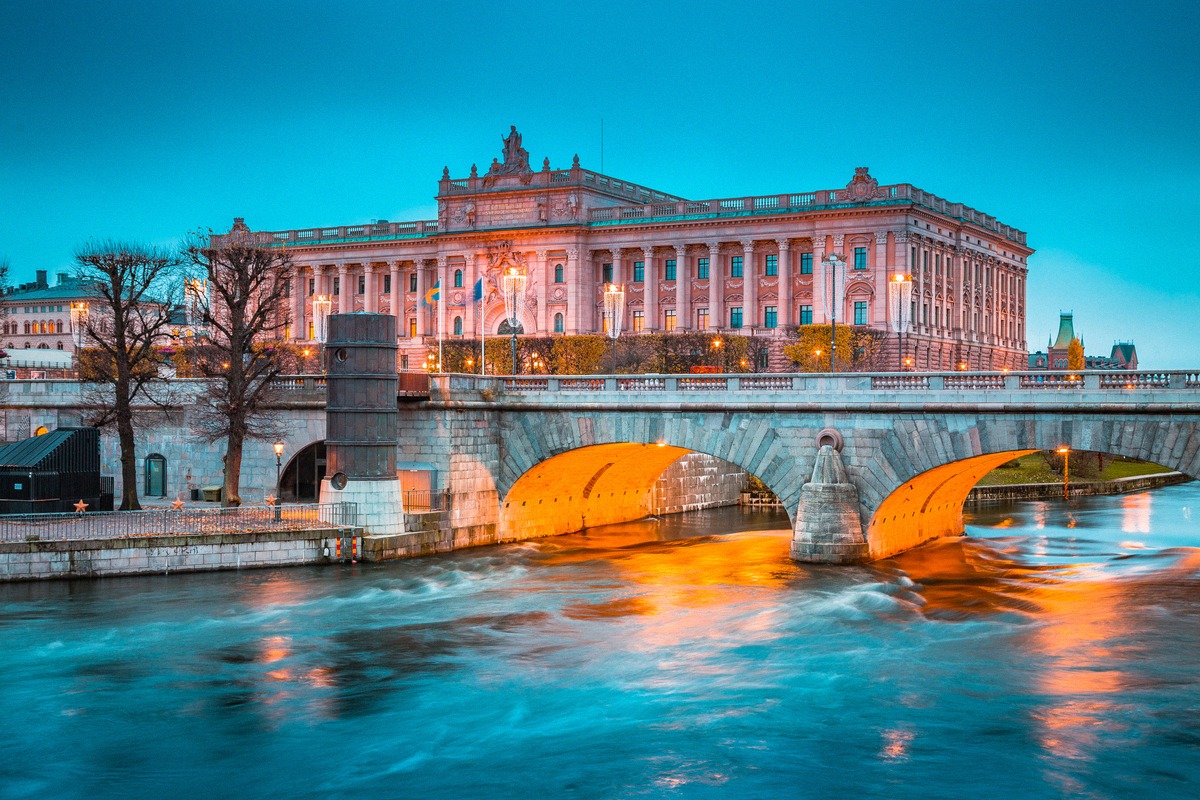
Medeltidsmuseet
The building under Norrbro has been closed since November 2023, and the new museum in Börshuset has no opening date yet. Until then, the museum presents Stockholm's Middle Ages on guided tours.
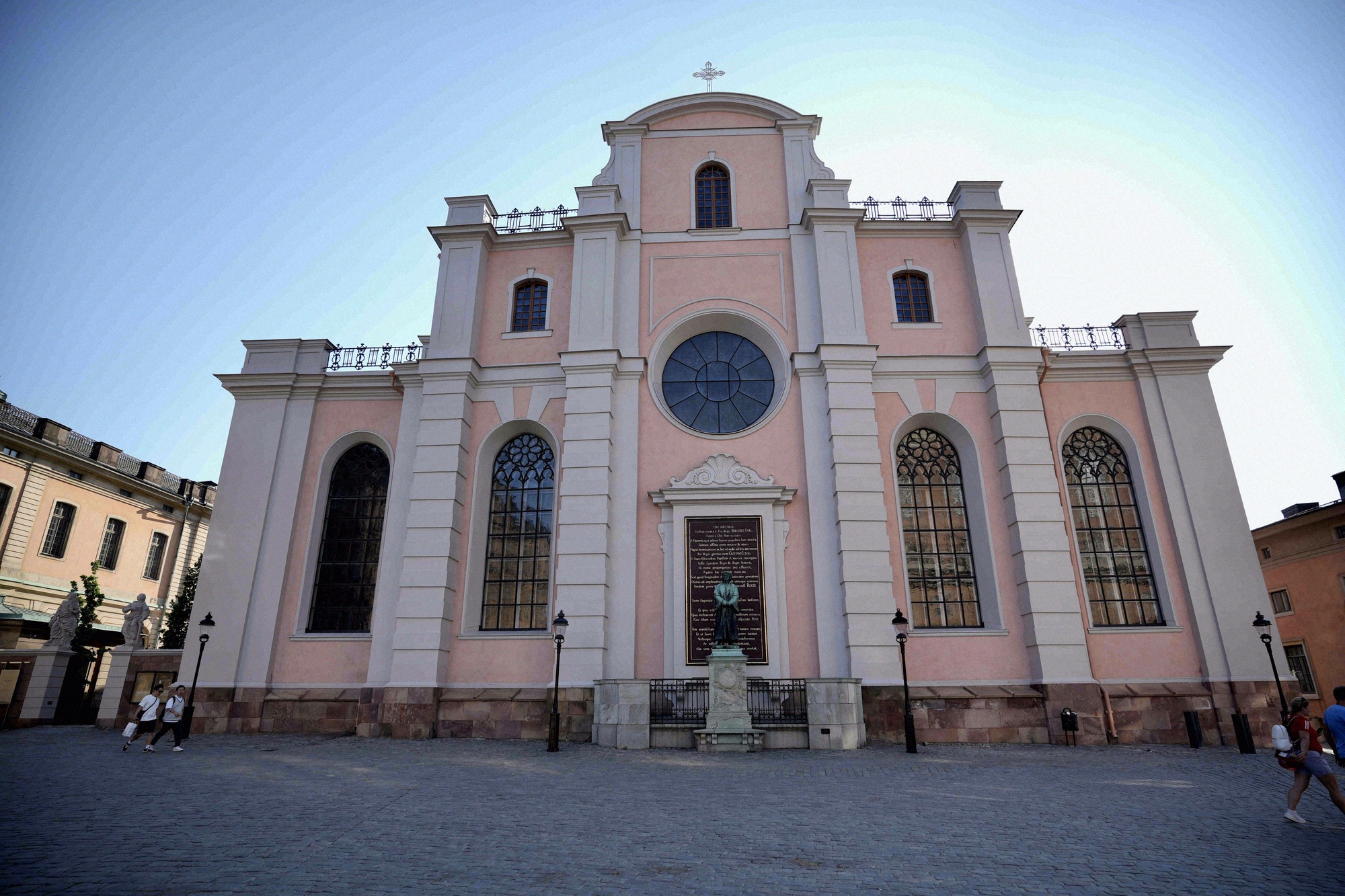
Storkyrkan (Stockholm Cathedral)
Behind the Baroque façade of Storkyrkan lies a medieval brick interior with St George fighting the dragon and the oldest colour image of Stockholm.