
Where to Stay in Stockholm? The Best Neighbourhoods
Gamla Stan, Norrmalm, Södermalm or Östermalm? Which Stockholm neighbourhood suits which type of trip, transport links, atmosphere and price level compared.
Contents
Stockholm is spread across 14 islands, but its core is compact and well connected by metro, ferries and trams. So choosing a neighbourhood affects atmosphere, evening quiet and price more than it affects how easily you can reach the sights. This guide covers the four central neighbourhoods plus the museum island Djurgården and points out which type of trip suits which area. For specific properties across every category, see The Best Hotels in Stockholm.
Norrmalm, the central, well-connected choice
Norrmalm, often simply called "City" by locals, is the most practical base, central and superbly connected. It's home to T-Centralen, the only station where all three metro lines (red, green, blue) meet. From here you can reach almost any corner of the city, and especially the airport, without changing trains, faster than from any other neighbourhood.
That's a real advantage if you're flying in or out. The Arlanda Express departs directly beneath Central Station and takes just 18 minutes non-stop to Arlanda Airport, roughly every 12 to 15 minutes. Its platforms connect straight into the metro and regional trains at Central Station, which saves a lot of walking with luggage. For more on getting there, see Getting to Stockholm.
Norrmalm also has the widest choice of hotels in the city. The trade-off is that this central location rarely comes cheap, and the area around the station can feel busy. If you want central but a touch quieter, look around Norrmalmstorg, just off the main shopping street.
Gamla Stan, old-town charm for a night or two
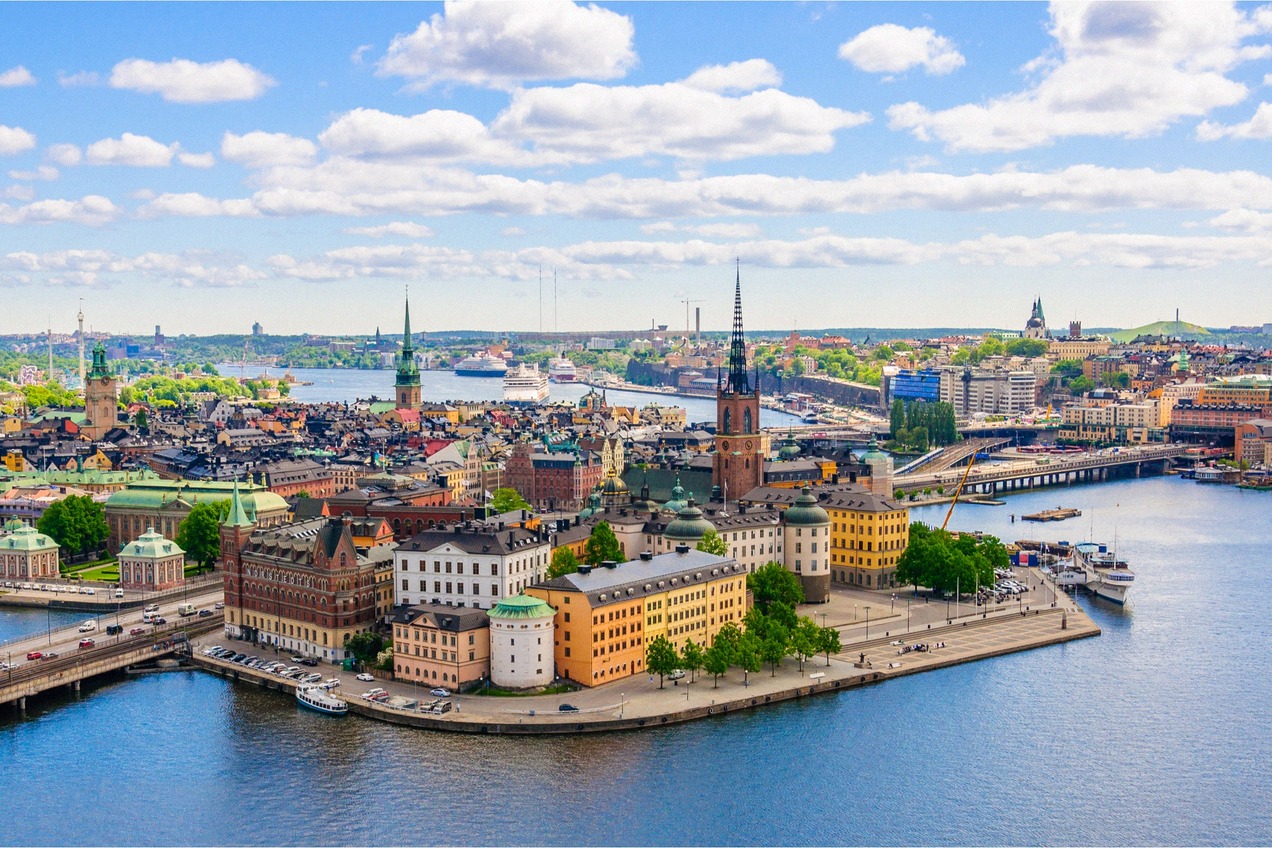
Neighbouring Gamla Stan, Stockholm's old town on the island of Stadsholmen, is the most charming base, medieval lanes, Stortorget square and the Royal Palace are all on the doorstep. Its own metro station (Gamla stan, red and green lines) is an interchange stop, so you're still quickly on your way from here.
If you stay here, it helps to know the rhythm of the day - Gamla Stan is busy with visitors by day but turns very quiet at night. That's exactly what makes it appealing if you want historic atmosphere; it's not the place for nightlife. For a night or two of old-town charm it's ideal, though some visitors find the narrow lanes and crowds tiring over a longer stay.
Worth knowing if you're driving, vehicle access into Gamla Stan is heavily restricted. A round-the- clock parking ban applies across the old town, and without a permit you can't drive in at all between 23:00 and 6:00. A hotel here and a car don't mix well; more on that in the driving section below.
Södermalm, creative, lively and usually cheaper
Södermalm, known to locals as "Söder", is the relaxed, creative choice. The neighbourhood has a hip, lively reputation, with galleries, vintage shops, cafés, bars and an active nightlife scene, popular with younger Stockholmers and weekend visitors. Prices here are usually below Gamla Stan and Norrmalm, which makes it worth a look on a tighter budget too. Budget travellers will find the highest concentration of hostels here, including Acco Hostel, Langholmen Hostel and Skanstulls Hostel.
Söder is also the neighbourhood for the best views. From the open granite outcrop of Skinnarviksberget you look out over Riddarfjärden bay towards Gamla Stan and Stockholm City Hall - at 53 metres above sea level it's the highest natural point in Stockholm, and a classic spot for sunset or a picnic. A little further east, the roughly 400-metre Monteliusvägen footpath runs along the clifftop with benches and panoramic views over the City Hall, Gamla Stan and Lake Mälaren; it's reached from Mariatorget.
You reach the old town via Slussen on the northern edge of the neighbourhood, one of Stockholm's four interchange metro stations (red and green lines). The major Slussen transport hub has been under reconstruction since 2016 and is being finished in stages, the bus terminal in 2025, the Mälarterrassen in 2026, and the whole junction by 2027/2028. The pedestrian link between Gamla Stan and Söder is already in place via the Water Plaza and the Mälaren staircase, completed in 2024, so you can walk between the two neighbourhoods dry-shod.
Östermalm, elegant, quiet and expensive
Östermalm is Stockholm's most elegant and exclusive district, upmarket shopping, the Stureplan nightlife area, and broad, stately streets. Compared with Gamla Stan and Söder it feels quieter and more spacious, which appeals to anyone after style and a bit of distance from the tourist crowds. The trade-off - Östermalm tends to be the most expensive of the four neighbourhoods.
Its biggest practical advantage lies by the water to the south. From Östermalm you can reach the museum island of Djurgården on foot via the Djurgårdsbron bridge, which extends the Narvavägen boulevard south to link the mainland with the island. The walk runs along the elegant Strandvägen waterfront promenade. From the bridgehead, the Vasa Museum and the Nordiska Museet are only about a five-minute walk away. If you want the big museums right on your doorstep with no changing trains, Östermalm is the place to be.
Djurgården and families, green, but with no metro of its own
For culture and nature lovers, Djurgården is the ideal setting, the museum island packs an unusual concentration of major attractions in among wide green spaces and parkland. Within easy reach of each other are the Vasa Museum, Skansen, Gröna Lund and ABBA The Museum, plus the Nordiska Museet and the Vrak Museum of Wrecks - most of them just 5 to 10 minutes' walk apart.
A few facts show how much is packed into this one island, the Vasa Museum costs 240 SEK in the 2026 high season (May to September) and 195 SEK the rest of the year, opening daily 8:30-18:00 in summer and 10:00-17:00 in winter (Wednesdays until 20:00). Skansen is open daily all year round, and 10:00-18:00 in summer (1 June to 30 August). Gröna Lund runs a May-to-September season; the 2026 Gröna-Kortet season pass costs 440 SEK, and a day ticket starts at around 130 SEK. If you're travelling with children, see the guide Stockholm with Kids for more detail.
Staying on Djurgården itself is difficult, though, the island has very few hotels and no metro station of its own; it's served by tram and ferry instead. In practice, families and museum-goers do better staying in neighbouring Östermalm and taking the short walk across the Djurgårdsbron bridge. That way you have the green island practically on your doorstep without giving up good transport links and hotel choice.
Driving in Stockholm, why a central base gets tricky
If you're arriving by car, it's worth thinking about parking when you choose a neighbourhood. In the city centre - Norrmalm, Östermalm and Gamla Stan, parking capacity is limited and expensive. Stockholm's on-street parking charges are among the highest in the world, running to around 1,100 SEK a month in the priciest zones; for an overnight stay, a garage is usually better value than a street space. In Gamla Stan, a hotel with a car is barely workable at all given the parking ban and access restrictions.
The simpler and cheaper option lies outside the city centre - Stockholm operates more than 40 park- and-ride sites at public transport hubs. Leaving the car there is affordable and secure, and the metro or Pendeltåg commuter trains get you into the centre quickly. For most visitors it's more relaxing to rely entirely on public transport within the city anyway, as the guide Getting Around Stockholm explains, a car is really only useful for day trips out into the surrounding region.